Retailers, omnichannel and the challenge of competing with everyone all the time


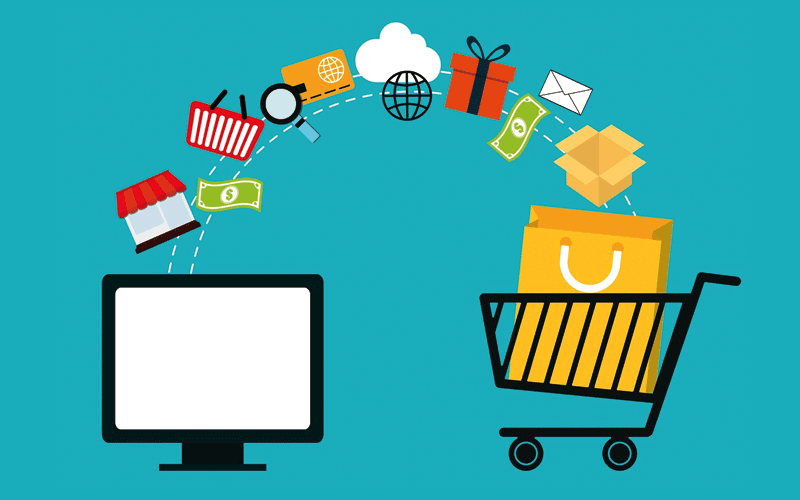
E-commerce exploded for everyone, but demand understood it more quickly than supply, which now faces the challenges of accompanying this accelerated change by competing in multiple channels at the same time. We talked about this with Federico Aon, Director of Commerce & Industry at Snoop Consulting.
Por Rodolfo Pollini
Seeing how ecommerce exploded during the pandemic, the first thing that emerges is that retailers that did not join online face a good number of challenges: thinking online and at the same time making this new channel coexist with the physical store.
There are many challenges. In the physical world it is clear who the competitors are and even more so if it is a small retailer, but in the online world you compete with everyone. A store in a town in the province of Buenos Aires that competed with local businesses is going to compete with the largest chains in its sector and even with Mercado Libre. What retail has to think about is what difference it can make with the physical store, how to provide a different after-sales service, ease of trying products, an integrated offer and that the channels complement each other.
Do you see it as more complicated to change the mental chip than technology?
The most difficult thing is to overcome resistance to change. We work with some retailers in the interior, almost always family businesses, and we see that children, who are now replacing parents, are the ones who are beginning to push these changes.
These new challenges are sometimes also perceived as threats, or with fear. Given this fear, is it better to launch into the online world with your own store or experiment more safely in a marketplace?
That has to do with the business, with what you have to invest in your own online store or with how much you are willing to give up on the margin, because the commissions charged by the marketplaces are high. Always, and at some point, the store itself ends up being more convenient. It is important to know that when you sell through a marketplace, the customers are not yours, but the marketplace's.
Is one of the impacts of that the impossibility of cross-selling, for example?
Exact. By going to the marketplace you save the investment of making your ecommerce site, but you lose the last mile of the customer. A marketplace like Mercado Libre is the best for your first online experience, because you can start in a week.
We are also seeing retailers becoming marketplaces and more direct sales of the brands themselves. Is there already a change within the change?
They are the rules of the game, because online eliminates all barriers. Our clients are SMEs, large retailers and manufacturers. Today it costs nothing for a manufacturer to sell directly, even if it does not do so to protect its old distribution chain, where it sells more than in the online world.
Omnichannel completely changed the consumer journey. In the physical store, that journey was defined and even controlled by the store itself, within the salon, but now each consumer designs their own journey when they decide where to look, where to compare and where to buy.
Yes, but there are technologies to analyze what customers do on sites and react to that journey as if you were in a physical store. Today you can see which products the user searched for on the site or which ones they added to the cart. There are heat maps that allow you to decide where on the page to put the product and tools to know if a person is hesitating and can abandon the cart to call them and help them make the purchase.
What is the information that this technology collects from different channels saying about the consumer today and surely reflects different behaviors and situations?
We define certain characteristics of the client. One is that you expect to have a personalized experience, and if you don't have it you feel poorly served. The customer enters a site and expects them to know what they are looking for and to offer them relevant things. This is what has to happen with omnichannel: the consumer searches on the Internet, then goes to the physical store and ends up purchasing, but since this can be done from different devices, they must be given the same experience in all the channels they used. Omnichannel is not only selling in all channels but also ensuring that the value proposition is the same in all of them. Even without being in all of them. A small store should choose where it wants to be and do it well wherever it decides to be. Now WhatsApp has become fashionable, but before being bad on WhatsApp it is better not to be there and nothing happens, the customer is not going to stop buying because of that.
We talk about being on all channels in the same way and yet we see that in many cases a different product price is offered for online purchases. How does this impact the user?
It's very bad. It is anti-omnichannel and the customer does not want it, except when it is justified, for example setting a different price for a different delivery time. You can give a discount to the customer when they are buying and you see that they are hesitant, to encourage them to buy, but your policy has to be homogeneous. Omnichannel also applies to the pricing policy, although it is an effort for retail, because the costs are not the same in the physical store and on the website.
Today consumers evolve exponentially and channels arithmetically. Do you see the gap between each other very wide?
Yes. 10 years ago the power that the consumer had on their cell phone was already greater than what companies could have on a desktop PC. With the phone you could do more things and with better applications. This happens and will continue to happen. Consumer technology advances faster because it has fewer barriers to change. Organizations are incentivized not to change, whether due to culture or costs.
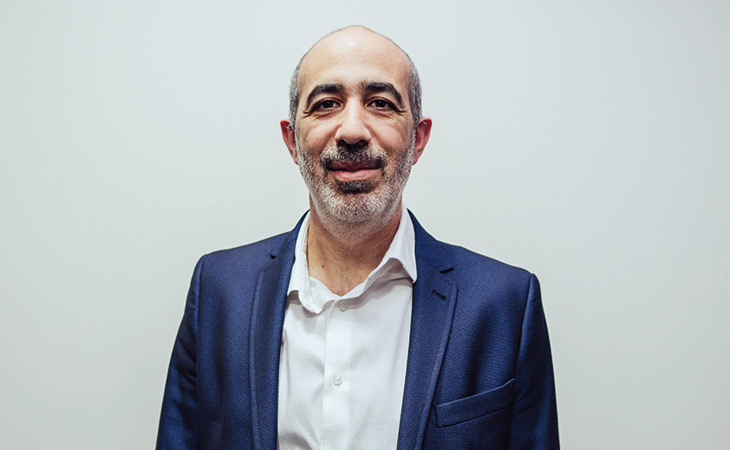
Federico Aon: "When the customer enters a site, they expect them to know what they are looking for and to be offered relevant things. This is what has to happen with omnichannel: the consumer searches on the Internet, then goes through the physical store and ends up purchasing, but since this can be done from different devices, they must be given the same experience in all the channels they used.



Latest news

Outstanding sector