Juan Martin, Manager of Lenovo: “The objective is to contribute to making technology increasingly more inclusive.”
We analyzed with the Lenovo executive the evolution and status of the computing technology market and technology in general in the post-pandemic period. The company's vision of business and retail as the main way for products to reach the consumer.


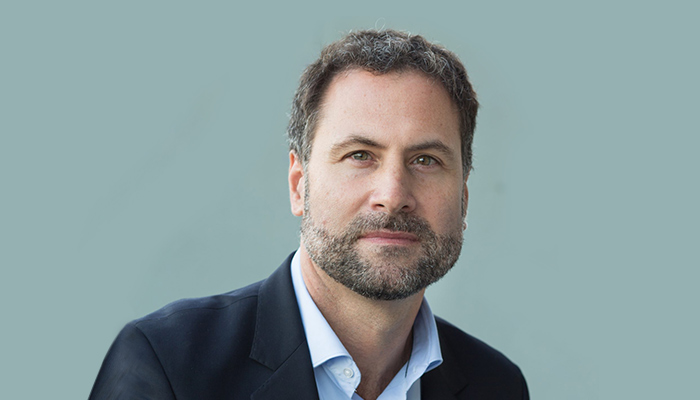
We analyzed with the Lenovo executive the evolution and status of the computing technology market and technology in general in the post-pandemic period. The company's vision of business and retail as the main way for products to reach the consumer.
Por Rodolfo Pollini
Mobility has been part of all of our lives for a long time. There are people who work only with a phone, those who alternate it with a tablet and those who need a notebook. What vision do you have of this scenario and how each device participates?
The telephone is one of the most suitable devices for communicating, but for work, study and leisure, a device with a better screen and more features is unbeatable. They complement each other without one replacing the other. The cell phone has a very uniform configuration and features and so does the tablet, but it has to do with use. Streaming and watching movies is not the same as working with images or processing information.
How do you see, from the demand, the market share of each one?
After the quarantine it became clear that you can work at home, in a bar or in an office and portable equipment allows you to exploit remote work. That is why it has a market share of around 80% and the rest is distributed among desktop computers.
What place does the desktop computer occupy today?
Today a desktop computer can be portable. At Lenovo we have one that can be stored in your jacket pocket. It is still a powerful CPU with a very small size. It's not that you can work without a keyboard and monitor, but I can take it and connect it at home or in an office. Products appear that do not have the price of a notebook but can fulfill the mobility function.
The pandemic produced a replacement of the park and a higher aspiration appeared in the consumer: a better device or jumping to the laptop. Are demand and supply balancing? I ask this because we came out of the pandemic and the war once again affected supply, logistics and the availability of resources.
During the pandemic, many families with several children began to incorporate a second or third device, but thinking carefully about what to buy. The consumer began to be more demanding and the brands began to work on the availability of these types of products. There is then a technological change and an expansion of the market, because the installed base grew. The war conflict came to the supply chain, already hit in the post-pandemic, and brought with it greater demand than supply. That situation tended to normalize and demand fell a little because part of its need was covered in the last two years.
The drop in demand is seen in Gartner or IDC reports. Do you see it more on low-end devices? Can we think that the markets will pay more attention to the corporate or premium segment?
This goes hand in hand with the markets, the maturity of each one and the segmentation of those markets, especially the commercial ones. There are industries in strong expansion and others in strong recession. There are industries with demand above what they had in the last two years and others in decline, such as financial industries that advanced their purchases during the pandemic and today show a decrease in demand.
How do you see that dynamic from consumption?
You are beginning to see niches with more weight. An example is gamers, a segment that grew during the pandemic and with products that are still growing. We are talking about consumer products and they are not the most economical. Certain high-configuration products show sustained demand and entry-level products show the most significant decline.
THE DEVELOPMENT OF RETAIL
"The channel is going through a stage of change that in many aspects has to do with being more efficient in the processes, to rotate quickly and with the necessary margins. Our challenge is how we accompany and help it, what trends we see in the market today and how retail can ride on those trends as quickly as possible."
Do you see a downward trend in prices?
Many components show a declining trend in cost. As supply and demand balance, the cost of components begins to show some decline. There were strong investments during the pandemic to increase installed capacity, which is beginning to be available so that there is a reduction in costs.
Could this drop in price and also in the consumer's perception of prices, especially in the consumer segment, enhance what you said before about user intelligence when looking for better devices and better configurations?
Completely. It is a visible behavior in very mature markets, where the consumer is very aware of price variations in high-end products.
Do we have access today to the same technology that the most developed markets have?
The same technology available in the central countries is available in the Argentine market. Training ourselves, knowing what we are acquiring, what we are going to promote, is essential and in much of that, retail has information and the ability to understand the trends that the Argentine market is going to have. This communication between them and us, on our part, giving visibility about the technology that is going to come, the times in which it will arrive and the vision of retail and their knowledge of the market allows us to be more efficient knowing that we have the product that is going to be sold.
Advice at the point of sale is essential. The consumer does not always know what to buy, or how to order it based on the result they want to obtain from their devices.
That's why I was referring to training. The people who are in the sales room are the ones who can interpret what each client needs. In the pandemic, many retailers that were previously outside of computer technology, upon seeing the demand that this category had and the opportunity to have this product in their offer, understood that selling computers is not simple, due to the diversity of configurations and uses that the products can have. Training will make your customer loyal to you for having sold them the product they needed.
Technology is already part of everyone's lives. How do you perceive it, projecting it immediately?
Technology has to be a tool so that people can develop, that is why it is important that the technology that the client needs reaches the right hands. Technology allows industries to be efficient, which results in better products and better costs. Something that is not minor is that technology has to be a factor of equality. During the pandemic we saw examples of schools where students could not study because they did not have the devices or connectivity. Technology must allow all people to have the same opportunities to develop.
Another consequence of technological expansion is remote work, which is not new but had not become as widespread as during the pandemic, and remains in that dynamic even afterward with hybrid work. Technology also had a lot to do with this.
At Lenovo, which had all its employees sitting in one office, we started hiring people from the interior of the country. We also have a service center in Argentina that exports services with people who work from here for the United States and Latin American countries. This already existed, but the pandemic enhanced it and technology allowed it. Lenovo's goal is to help make technology increasingly inclusive.



Latest news

Outstanding sector