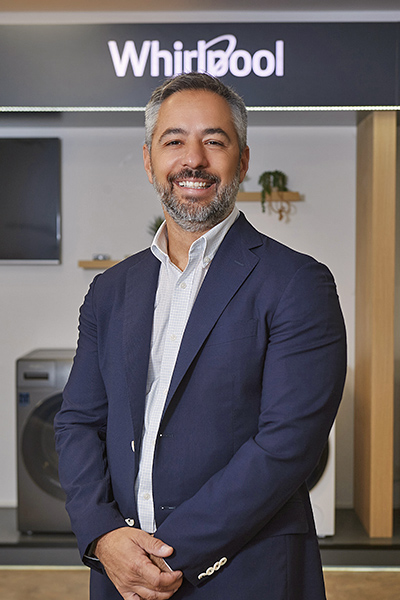
Exclusive interview: Martín Castro Director for the southern region at Whirlpool Latin America
"We want our exports to exceed imports"



With the regional director of Whirlpool we analyze the market, the evolution of the white line products and the projections of the new Pilar production plant, from which they have already started exporting frontal cargo washes to Brazil.
How did you see the market and the white line sector, for 2022 and what goes this year?
In general, it is a market that is showing a very accelerated growth rate. From the last year and what goes from this to August, it is almost twenty months and the last nineteen the white line showed growth in units against the same month of the previous year. It is a market that in volume is strongly traction and is growing, because the pandemic generated an attraction to aggiornar the house, remains a place of refuge of value for technological innovations and an attractive market for the Argentine consumer that grows with a positive rate and in which from Whirlpool we are gaining market share.
"We want our exports
exceed imports "
Do that market growth have measured?
In the first quarter it came around 20% growth compared to last quarter. In the second quarter it slowed down and in the semester it has been growing around 12% or 14%. We can detect that the market is going to slow down, but it has double digit growth.
How do you analyze it for each category?
Refrigeration, cooking and washing show equal growth. They will keep in mind the investment we made at the Pilar plant, between 52 and 54 million dollars in the company's most modern factory worldwide. Our fort there is to develop frontal loading washes and have a calendar year of 300,000 units, with two thirds for export and more than 100,000 units for the local market. Front loading is one of the market growth drivers, and we leverage it with our upper load line, a category that works very well.
How do you see ice cream makers and kitchens, segments where they also have new products?
Unlike other markets, the great fort are still cyclic ice cream makers, with 70% participation. However, both non -frost and cyclic, have growth rates and kitchens, which with less volume grow year against year and add innovations.
Even with a lower volume, does Non Frost's participation about cyclicals grow?
It is not having the growth that we as a company seek. The main limitation is the high disbursement that the consumer has to make when comparing cyclicals against Non Frost. In most foreign markets, cyclicals is a category that tends to disappear. The Argentine market has certain similarities with that of Europe, but not necessarily with that of the United States and this depends on what type of products is compared and on what origin, if we are more consumers of the European or American segment.
Commercial balance
"Our goal is to have a supervital trade balance," said Castro, referring to the import and export policy. "This would position us as the only electro industry in that situation. When one looks at all the electronics industries in Argentina, it is seen that they are deficit from the point of view of the trade balance. Our interest is that exports exceed imports and for that we made investments in the Pilar plant."
In washing notorious differences with other regional markets?
The Argentine market is very leveraged in the frontal cargo washing machines and in Brazil is totally the other way around, where the upper load predominates. When we thought about the development of the plant, the decision was that Argentina integrates into the company's productive matrix at the regional level, but with all the expertise at the level of the consumer here, where front load washing is preferred. The plant was installed to complement what exists at the regional level and, by that expertise, we are going to export frontal freight washes in the rest of the markets.
Is the policy export to Brazil Front Load washing machine and develop that segment there?
Clear. In a first stage from Argentina we will supply the Brazilian market with frontal load and as we have more volume we will supply the rest of the markets in Latin America.
Are there concrete plans to go to any or some of those other markets?
All markets are open to the development of our products. We have the company's most modern plant worldwide and there is avidity in the markets for having this type of products. We are still in the learning curve. When that curve ends and we have the volume we were talking about, beyond supplying the Brazilian market we will supply the rest of the markets where we operate.
How much did they already export to the Brazilian market?
We started in March and 30% of the entire manufacturing volume was exported to Brazil. Last month we closed around 60% of the total production generated by the plant.
PRODUCTION
"In the current context it is very significant that we are taking 150 more people in the plant," Castro said.
In the future, do you also plan to produce other appliances?
Today 90% is intended for the development and production of frontal load washing machine and we also assemble higher load washing and kitchens.
How is the strategy for whirlpool and luxury link in the consumption target of each?
Luxury link is more than 70 years in the country and Whirlpool More than 30. Each brand has a different situation and independently of the socio -economic level, litraje or technological innovation, we try to cover all consumers and complement the two brands to the entire category.
Thinking about luxury link and its 70 years, how does a brand evolve that was conceptually determined for a whole generation and can mean something totally different for later?
One of the tasks of the marketing team is to continue to aggiornate the brand, and make it attractive to the new generations. Both with luxury link and with Whirlpool we update us so that our consumers continue to choose. We are clear to what consumer segment we are talking about and how we talk to you, especially to the new generations that tomorrow will be recurring consumers of our products.
What scenario or industrial and commercial situation are planned to reach when they reach 300,000 units/year manufactured?
Our estimate is that these 300,000 units generate more than 50 million dollars in exports and with that we would have a zero or positive trade balance, achieving a very competitive position with respect to our competitors in terms of the commercial balance.
 Are they going to rely on that balance surplus or will develop more local suppliers, both from parts and supplies?
It's an excellent question. Before developing the plant we had been working on the development of local suppliers and when we had the factory set up we had many talks with the Production Secretariat, because it is our responsibility to generate the development of these suppliers and continue developing the national industry. With the Secretariat we were working on what type of local suppliers we needed to develop, so that they could help us find them. This year we reduced imports between 7 and 9 million dollars due to the development of local suppliers and for next year we estimate to reach between 15 and 17 million.
How do you see the immediate future, regarding consumption and distribution channels?
As a company, I see that we have a lot of room to continue growing and developing products. We believe that the Argentine consumer is always eager to have new products and continue investing in them.
From the point of view of the channels, one in every 4 products we sell goes through the online channel and both the different types of clients, as well as the company, have been developing everything that has to do with digital sales and it seems to me that this will continue to happen. There are markets that in the post-pandemic returned to a slightly smaller online platform, others the other way around and there is still a possibility of developing these channels in a much larger way. The retail channel is still adjusting due to the pandemic and post-pandemic and what happened with players like Garbarino, Ribeiro or the departure of Falabella.
Even with the cases you mentioned, there was no noticeable concentration.
No, quite the opposite. The channel remains atomized if we compare it with Chile, or the United States, where sales channels are much more centralized. We, on average, serve about 200 accounts per month, but there are companies that have more than 1,500. The Argentine market has many points of contact with consumers.
How do you manage sustainability policies in the plant?
When we designed the plant we thought about making it sustainable. It has a lot of natural lighting, so energy consumption is very low. We collect rainwater for all the water use that is needed and we do not bury waste, in addition to generating a tree plantation to offset any type of environmental impact that we could be causing in the Municipality of Pilar. The plant incorporates state-of-the-art technology that will allow us to focus on the export of products with high added value and World Class Manufacturing (WCM) quality standards, which ensure efficiency through the latest global manufacturing technology and allow us to develop production based on sustainable operations and practices.
Is there anything I haven't asked you?
I think we touched on all the topics. Just note that we are incorporating the second hiring shift at the plant. In the current context, it is more than significant that in August we are incorporating 150 more people to have a significant level of exports. In Pilar we settled on 80,000 square meters of which we have already built 30,000 and we bought an adjacent land with another 80,000 square meters, thinking, in the future, of developing a new factory.
By Rodolfo Pollini / rdpa2005@gmail.com



Latest news
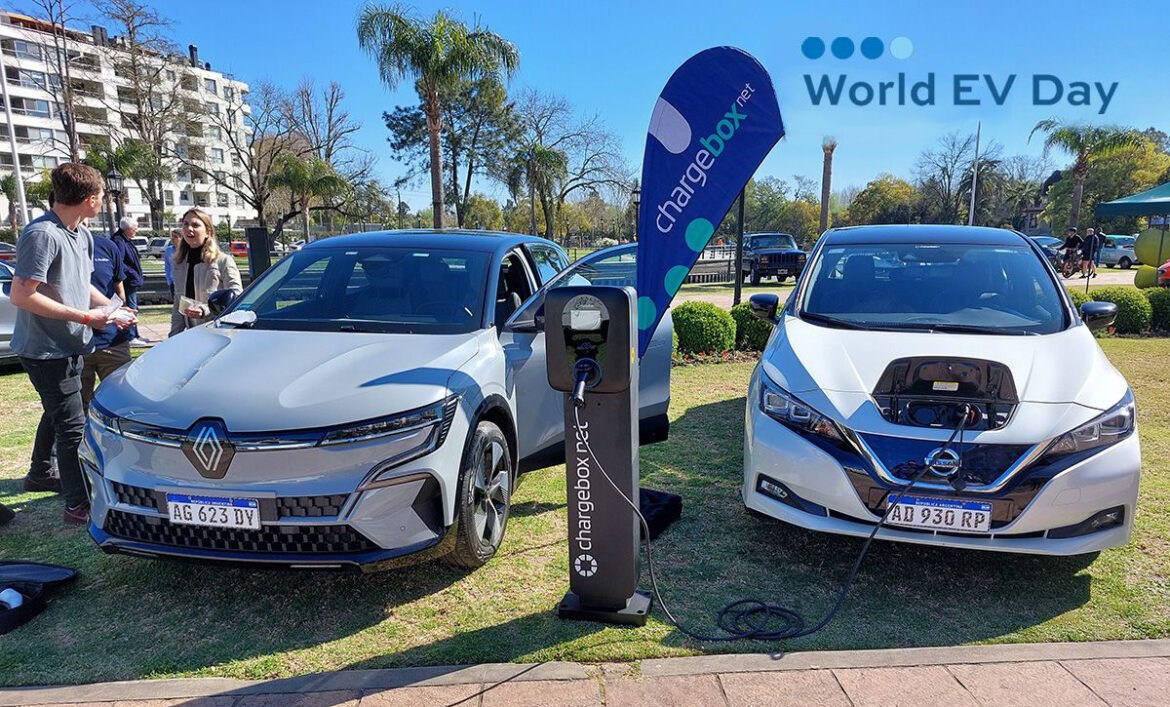
World EV Day 2026: AAVEA once again brings together the electric mobility community in Buenos Aires

Outstanding sector