
Interview with Marcelo Bordoy from Hogarnet: “Our sales skyrocketed exponentially”


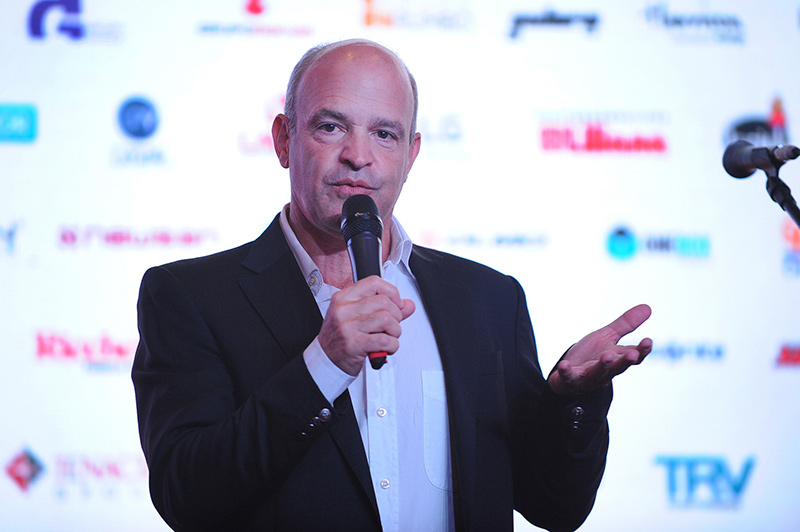
The head of Hogarnet affirms that sales of the country's leading home goods, technology, furniture, bazaar and decoration network grew 100% during the pandemic. Although it expects a moderation in demand, it is committed to maintaining market share.
By Hernán Murúa
"Hogarnet had a significant growth in customers this year. It exceeded 290 members, which keeps us in the leadership of the purchasing networks for household items, technology, furniture, bazaar and decoration with more customers in the country," emphasizes, enthusiastically, Marcelo Bordoy, owner of Hogarnet, to begin the exclusive interview with Business integration.
Precisely for this reason, he states that the main objective that he sets as the head of the organization is “to continue improving the service to our members, so that they can continue to have merchandise and the profitability necessary to continue competing more and better in the market.”
What was the evolution of your sales of household appliances and electronics in this unusual year?-he investigated Business integration.
Like the rest of the market, our sales skyrocketed exponentially. From May to September, sales grew more than 100% compared to 2019 values, including products of all lines, prices and brands, much more than we had planned and had prepared for. Fortunately, this new demand was met in a very satisfactory manner.
In this sense, Hogarnet, like other players in the market, benefited from the surpluses of families with secured fixed incomes but with lower expenses, due to the restrictions stipulated to avoid the spread of COVID-19, which prevented them from traveling and using recreational consumption, and who were then able to use that savings to purchase products.
How did you have to modify commercial management due to the pandemic?
Commercially, the most difficult change since this pandemic broke out consisted of adapting to the merchandise that was being received, based on the slow, complicated and difficult provision of our suppliers. It was no longer possible to count on reliable programs, guaranteed deliveries or precise reception times, necessary to put together the necessary supply and sell according to demand and seasonality.
Was the consequence of the restrictions in the factories the only obstacle?
The sector also lost funding from suppliers. Due to significant price fluctuations, due to the increase and instability of the exchange rate, most items went to advance payment. That represented an important change caused by the 2020 pandemic.
And what was the evolution of online sales?
Without a doubt, the online channel became the protagonist at the beginning of the pandemic, due to the impossibility of free circulation of the public. Many clients owe this situation to have taken their first steps in this channel, which obviously grew significantly in all areas of our businesses. In addition, the product and brand options offered were enriched. There was also a significant improvement in profitability.
How do you envision the post-pandemic future?
For the post-pandemic future, we do not foresee that the demand we currently have can be maintained. Little by little, the public will recover its investment options, returning to tourism and recreation. All these items will once again occupy their corresponding places in each budget, to the detriment of ours.
What projections do you have, then, for the market over the next year and based on what indicators they are based on?
Our projection is to try to maintain the space we had in 2020, both in volume and in the different audience segments. For this, we count on our suppliers to be able to recover more acceptable levels of production, to keep up with genuine demand. But I consider an increase in sales compared to 2020 impossible. Inflation was and continues to be very high, in relation to the public's income, which makes the situation very difficult for many people, even if they are used to it. Hopefully consumers will stop losing purchasing power and inflation will return to more normal values.

LOOKING FOR THE APARTMENT: CAME indicators show that in the SME segment the average year-on-year falls in March and April compared to 2019 were 53.5% in retail sales and 41% in industrial production. Although a slow moderation in the fall in activity has been observed since May, in July retail sales still registered a year-on-year decrease of 27.7%, while in June the decline in industrial production was 23.5% compared to the same month in 2019.
THE SO DREADED UNEMPLOYMENT: The report indicates that although layoffs are prohibited, between February and May 149,000 salaried positions were lost in the private sector, bringing the decline between May 2019 and May 2020 to 294,628 positions (-4.8%). The incidence of the crisis in the SME segment was relatively higher: CAME cites the Labor Indicators Survey of the National Ministry of Labor, which shows a drop in employment between June and February that in the group of companies with up to 49 employees was 2.4%, and among those that employ between 50 and 199 people, 1.7%. Among those with more than 200 employees, the decrease was around 1%.




Latest news

Outstanding sector