Dell Technologies Forum 2022 Results
Dell Technologies held its annual event, Dell Technologies Forum Buenos Aires, in person after 2 years of virtual edition. The company brought together its entire technological portfolio and the most prominent experts to collaborate with clients and partners on their path to digital transformation.



The event left important conclusions about the digitalization projects of the future.
Dell Technologies held its annual event, Dell Technologies Forum Buenos Aires, in person after 2 years of virtual edition. The company brought together its entire technological portfolio and the most prominent experts to collaborate with clients and partners on their path to digital transformation.
The event began with a conference by Patricio Iraolagoitia, general manager of Dell Technologies Argentina, Uruguay and Paraguay, who presented the results of the “Breakthrough” latest research study carried out by the company and which represents the largest research carried out by Dell Technologies. It included 10,500 respondents from 14 industries in more than 40 countries to examine the intersection between people and technology and asked what the biggest challenges and possibilities ahead are to provide key insights to drive people-led innovation.
“Following the pandemic, while some organizations made further progress on their flexible work plans, others had to make quick and unforeseen pivots to keep their people safe and the business operational,” Iraolagoitia said. "To support a sudden wave of remote workers, safely, IT teams around the world had truly amazing initiatives to achieve in a few weeks what would normally have taken years. The current challenge is that, after these years of adapting to the unexpected, people are exhausted and tired in the era of digital transformation, and organizations need a new structure, an aligned culture, to offer continuity in this permanent change and in the new digital world," said Iraolagoitia.
Raymundo Peixoto, senior vice president of Dell Technologies Latin America, spoke about innovation and the possibilities that companies have today, whether they have a multi-cloud strategy delivered as a service, modernized and secure technologies, or enabling AI decision making at the edge.
Santiago Siri, founder of Democracy Earth, a non-profit organization supported by Y Combinator, developer of Universal Basic Income on Ethereum and the Proof of Humanity protocol, and Executive Director of DAO Education, an organization focused on teaching for the information society, explained the emergence of Web3 and the new era in computer systems, which, thanks to the use of smart contracts, allows users to become not only consumers, but also active participants in the development of new technology.
-
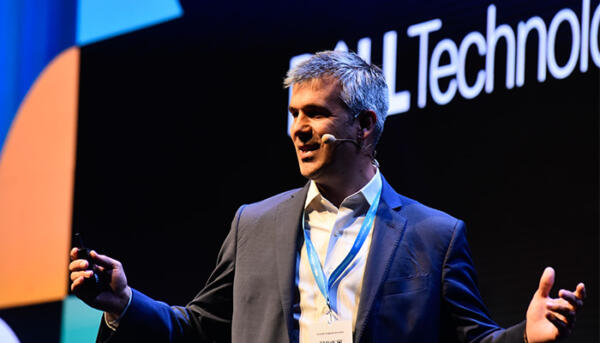
- Patricio Iraolagoitia: “The current challenge is that, after these years of adapting to the unexpected, people are exhausted and tired in the era of digital transformation, and organizations need a new structure, an aligned culture, to offer continuity in this permanent change and in the new digital world.”
-

- Raymundo Peixoto spoke about the innovation and possibilities that companies have today, whether they have a multi-cloud strategy delivered as a service, modernized and secure technologies or the enablement of AI decision making at the edge.
Breakthrough study results
The price of an accelerated transformation
37% believe their staff are struggling with burnout and/or poor mental health that is affecting results.
After years of remote work, 52% still do not experience a better work-life balance.
46% of respondents say they don't always have the motivation or energy to take action regarding digital transformation in the workplace.
The 3 people-related barriers to Digital Transformation are lack of digital skills and aptitude for innovation, vision and a people-focused strategy, and a culture of innovation.
Lack of digital skills and aptitude for innovation
73% point out what is missing in their teams: people attracted to learning/curiosity, people who look to the future, people who learn from mistakes.
Lack of vision and a strategy focused on people. It takes visionary leadership and a clear digital strategy that prioritizes people.
65% think that their organization underestimates people's requirements when planning transformation programs.
67% do not regularly measure the effect of their digital transformation initiatives on employees and therefore do not make appropriate adjustments.
37% are concerned about being left out of the digital world due to a lack of staff with the right authority/vision to capitalize on the opportunity.
68% are worried because they do not have the necessary skills to progress a digital transformation. The STEM skills gap is well known, but a lack of innovation skills is also holding people and/or organizations back.
Lack of a culture of innovation:
57% of respondents say organizational culture is limiting employees' ability to innovate.
39% are struggling with internal policies, lack of clear communication and/or weak decision-making and governance. In this environment, people silently resist change.
For example, faced with a digital change that people do not agree with, 39% of respondents would do any of the following:
Wait and see what will happen: cooperate when absolutely necessary, with minimal input.
Find excuses not to participate/delay change.
Postpone or distort the change.
Despite working remotely for the past two years, 52% of all respondents still do not experience a better work-life balance. However, they see benefits: 82% of all respondents foresee the shift to distributed (hybrid) working creating a more inclusive work environment. To make this happen, people are looking to leaders to guide and empower them.
The workforce would like leaders to implement the following:
53% would like to see their leaders better equipped to effectively manage remote teams.
47% would like to be empowered to choose their work model and receive the necessary tools/infrastructure.
35% would like to receive greater clarity regarding the commitment to flexible working and the practicalities of making it work.
CONCLUSIONS AND LEARNINGS
The world where anything is done from anywhere is here to stay.
Organizations must adapt their culture to sustain the current pace of change because challenges related to burnout are growing.
To restore balance in the workplace, leaders need to shape their work-from-anywhere strategy around the needs of their staff.
The advancement of organizations will be achieved with team members at the forefront.
People are and will be an integral source of creativity and value. A well-planned alliance between humans and machines has the ability to unleash the innovator in all of them.
To enable innovative experiences accessible from anywhere, CIOs must modernize IT, build a secure foundation, and deliver intelligent experiences.




Latest news




Outstanding sector