
The pandemic boosted the sale of smaller household items
The images were replicated on social networks. Homely postcards depicting different menus flooded Instagram and Facebook every day, as part of the trend [...]


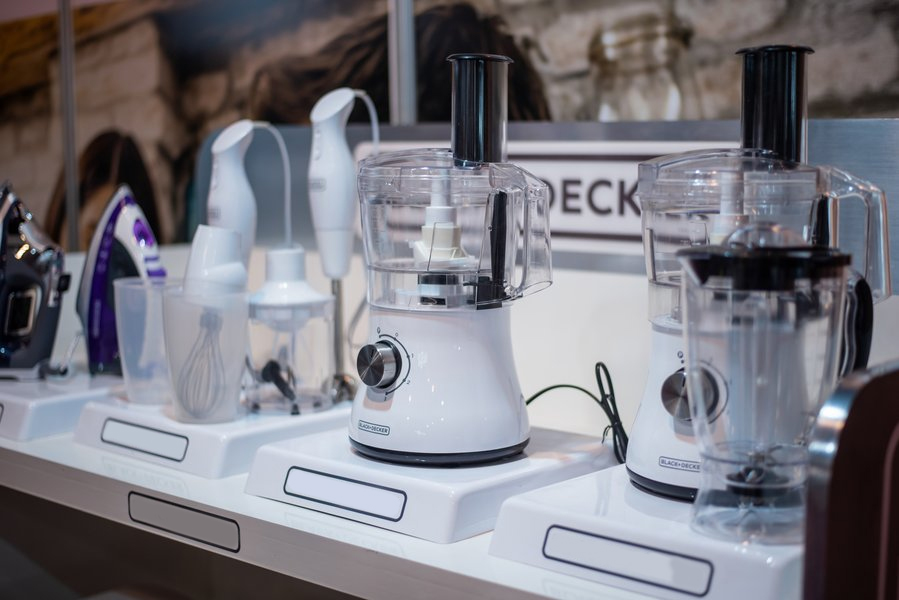
The images were replicated on social networks. Homely postcards depicting different menus flooded Instagram and Facebook every day, as part of the trend of the period slogan: “stay at home.” This phenomenon had a direct impact on the household appliance sector, especially on a subsegment of this industry: that of smaller products.
"The year 2020 generated changes in consumption habits due to the need for people to stay at home. This changed habits when it came to cooking and cleaning."explains Pablo Mateos, DA Product Marketing Samsung Argentina.
The so-called “new normal” established the concept of cooking as “fun” and “hobby,” according to Mateos. “For example, in the case of microwave ovens, they are now not only considered a complement that allows reducing waiting time when heating and generating balance in daily life, but also as a tool for cooking,” the executive explains.
This also impacted cleaning habits. "Many who were not used to using vacuum cleaners before, after spending a lot of time at home, began to do so and discovered that their use significantly reduces the time one invests in this task. In this sense, we see that this market has enormous growth potential due to this new user that is presented," adds the executive. “Following this line that we just mentioned, we see that this market still has the potential to continue growing and offer multiple options to consumers,” anticipates Mateos.
On the rise. According to official data, in Argentina the sale of household appliances and white goods has experienced notable growth in recent months. “Consumption behavior was atypical, it was very concentrated in a certain period (April, May and June) and then we saw a phase of shortages that will not happen this year”, remembers Ezequiel Brusco, Manager of Small Appliances at Newsan.
The “Survey of appliance and household goods stores”, published by INDEC at the end of February, revealed that, during the last quarter of 2020, total shipments in this segment grew by 66.8% year-on-year. The sector's turnover in the last quarter of 2020 reached $67,992 million. The numbers reflect that the trend continues in the first months of 2021, when it is estimated that sales increased another 20% compared to the last months of 2020.
This phenomenon attracted investments from local groups, who saw the opportunity to win this new nascent market. According to a study by the consulting firm Claves, “In terms of apparent consumption or domestic sales, the proportion of national products is very high, exceeding 90% in recent years.” And he adds that "99% of the ovens, stoves and stoves consumed domestically in 2020 were produced locally. In addition, small household appliances (PAD) present the greatest variety: there are irons, blenders, juicers, coffee makers, blenders, epilators and electric shavers and processors.", he adds.
Made in Argentina. Brusco confirms that there are more products of national origin: “although there will continue to be imports, there will begin to be more and more locally manufactured products.” One of the national groups that landed in this niche was the Nueva Neba Group, traditionally related to the production of refrigerators and freezers. Last year, the development of the line of electric ovens began in Catamarca. "We observed that there was a shortage in the market. And throughout the year the demand was greater than the supply," explains Cristian Alfaro, director of NEBA. This bet involved the conversion of a plant and the development of the line. Today, Nueva Neba produces nearly 90,000 units per year between refrigerators and freezers, to which it added the line of 18 models of electric ovens (22, 35, 52 and 70 liters). “For this, a state-of-the-art, fully robotized Italian automated line (Euromac) was set up to optimize the manufacturing of ovens to reach 12,000 units per month,” Alfaro details. By the end of 2021, they plan to manufacture 100,000 ovens, which together with the production of refrigerators and freezers, dryers and a heating line, will allow Neba to reach a turnover of $6 billion.
In which areas are the sales of these products concentrated? From Newsan they explain that about 40% of consumption occurs in CABA and GBA, while all the rest of the regions generate 60%, among which the NOA and NEA are the most predominant. "The AMBA is an important market for any brand and product. But we focus on the interior because in the oven market we have the competitive advantage of the lack of gas. From the center of the country to the north, there is only bottled gas. So, cooking food is by electricity. It is in high demand," adds Alfaro.
What is to come looks “very similar” to the 2020 scenario. At least, that's how the companies project it. "As the context indicates that we will continue to spend a lot of time in our homes, routines will continue to adapt. We see that it is essential for the user to have innovative equipment that offers cutting-edge technology, which is why we will continue to grow with our product portfolio," says Mateos. At Newsan they project “a very good year,” predicts Brusco. And he adds: “We work with a broad portfolio of brands, but in small appliances our flagship brand is ATMA and we expect a great year.” Business, for the home appliance industry, also comes in small packaging.
Marcelo Alfano / noticias.perfil.com



Latest news

Outstanding sector