
Report: Monitors after the pandemic
We analyze the companies' products and, about the market, we talk with executives from Lenovo and ViewSonic.


Por Rodolfo Pollini
We analyze the companies' products and, about the market, we talk with executives from Lenovo and ViewSonic.
Beyond the consequences greater than 19, it continues to be a reference figure, because in some markets it increased demand to unexpected levels. The consequence of that was, naturally, what some see as a fall, which in reality it is, and others as a return to normality, even with volumes that exceed those of the pre-pandemic. But last year the global macroeconomic situation affected inventories, supplying industries and consumers, and monitors did not escape that picture. There was a drop, but analysts see encouraging expectations.
According to IDC Tracker, PC monitor shipments hit an all-time low in Q4 2022, but a recovery is expected in 2024. PC monitor shipments declined 18.3% year-over-year in Q4 2022, leading to a 5.9% decline for the full year, according to data from IDC's Worldwide Quarterly PC Monitor Tracker. At just over 30.5 million units, last year's fourth quarter results were the lowest volume since IDC monitored the market (2008), something to be expected if the effects of the global macroeconomy on all sectors are taken into account.
Although everything indicates that this year the global growth of computer and gaming monitors will slow down, this must be part of the great development that this industry had for almost three years, largely driven by gaming and the home office in the midst of a pandemic.
IDC expects 2023 shipments to decline another 9.8%, and this would be supported by two factors: inventory and lower demand. During 2024 there would be some recovery in volumes, exceeding those before the pandemic but conditional on inventory improving. IDC predicts, after 2024, greater stabilization based on a larger installed base originating from hybrid work and the growth of gaming.
Data from Jay Chou, research manager of IDC's Worldwide Client Device Trackers indicated that annual volume had averaged 125 million before the pandemic and rose to more than 135 million for each of the last three years. Although it will take a while for the market to settle, there is confidence that in the coming years a large part of the installed base, and recently expanded, will once again feel the tickle of updating.
Por Rodolfo Pollini
We analyze the companies' products and, about the market, we talk with executives from Lenovo and ViewSonic.
Beyond the consequences greater than 19, it continues to be a reference figure, because in some markets it increased demand to unexpected levels. The consequence of that was, naturally, what some see as a fall, which in reality it is, and others as a return to normality, even with volumes that exceed those of the pre-pandemic. But last year the global macroeconomic situation affected inventories, supplying industries and consumers, and monitors did not escape that picture. There was a drop, but analysts see encouraging expectations.
According to IDC Tracker, PC monitor shipments hit an all-time low in Q4 2022, but a recovery is expected in 2024. PC monitor shipments declined 18.3% year-over-year in Q4 2022, leading to a 5.9% decline for the full year, according to data from IDC's Worldwide Quarterly PC Monitor Tracker. At just over 30.5 million units, last year's fourth quarter results were the lowest volume since IDC monitored the market (2008), something to be expected if the effects of the global macroeconomy on all sectors are taken into account.
Although everything indicates that this year the global growth of computer and gaming monitors will slow down, this must be part of the great development that this industry had for almost three years, largely driven by gaming and the home office in the midst of a pandemic.
IDC expects 2023 shipments to decline another 9.8%, and this would be supported by two factors: inventory and lower demand. During 2024 there would be some recovery in volumes, exceeding those before the pandemic but conditional on inventory improving. IDC predicts, after 2024, greater stabilization based on a larger installed base originating from hybrid work and the growth of gaming.
Data from Jay Chou, research manager of IDC's Worldwide Client Device Trackers indicated that annual volume had averaged 125 million before the pandemic and rose to more than 135 million for each of the last three years. Although it will take a while for the market to settle, there is confidence that in the coming years a large part of the installed base, and recently expanded, will once again feel the tickle of updating.
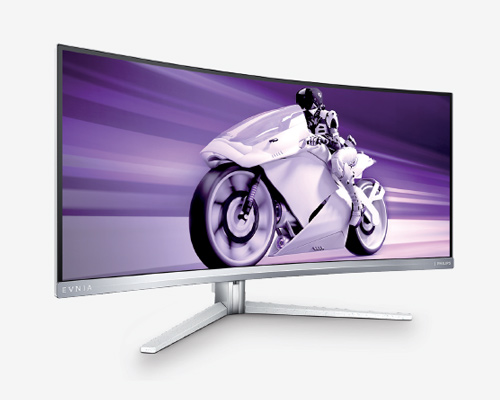
PHILIPS
Philips presents an Evnia model from the 8000 Series. Philips Evnia launched the new 42M2N8900 monitor. The Evnia 8000 series features a true 10-bit display, OLED display with more precise contrast, 138 Hz refresh rate, 0.1 ms GTG response, DTS for optimized sound and UltraClear 4K UHD resolution (3840 x 2160). It has a slim four-sided bezel, 42” display, KVM to control dual PC setup, USB-C port, and height-adjustable stand (HAS).
Ambiglow backlighting is also present in the 42M2N8900, but the three main features that the brand highlights are the 138 Hz refresh rate, low input lag, and OLED technology. The result: a smooth gaming experience and vibrant visuals guaranteed.
LG
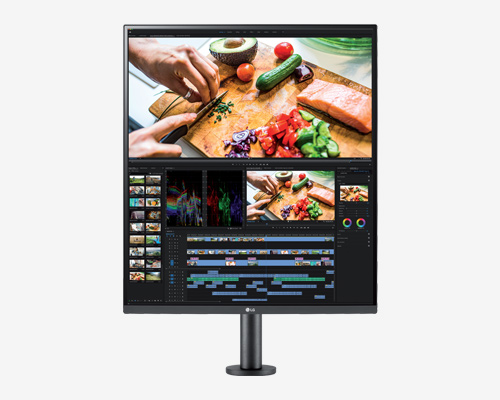
LG offers monitors from 28 to 49 inches. LG highlights three monitors. The 49WL95C-WE 49 UltraWide Dual QHD IPS LED has Dual QHD resolution (5120 x 1440 pixels); IPS panel (In-Plane Switching); 60Hz refresh; 5 ms response (GtG); 2 HDMI ports; 1 DisplayPort port; 1 USB-C port; 2 USB 3.0 ports; headphone jack and optical audio output. It is curved and brings HDR 10, Picture-by-Picture and Picture-in-Picture; and 2 x10 watt speakers. The 28'' 16:18 DualUp Monitor offers 16:18 resolution (3840 x 2160 pixels); Nano IPS panel; 60Hz refresh; 5ms response; 1 USB Type-C port; 2 HDMI ports; 1 DisplayPort port and 1 USB 3.0 port. Both have height and angle adjustment, reduction of eye fatigue and eye fatigue when reading long texts.
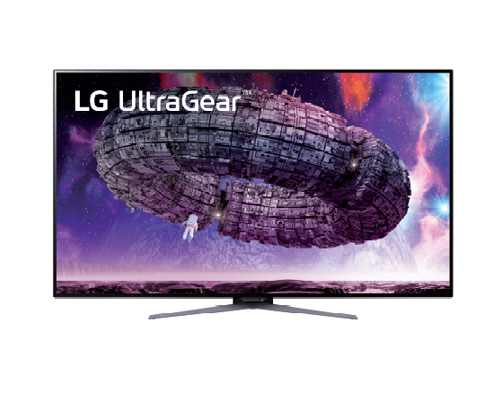
The 48'' UltraGear has UHD resolution (3840 x 2160 pixels); panel: OLED; 120 Hz refresh rate and 0.1 ms response (GtG); 2 HDMI 2.1 ports, 1 DisplayPort 1.4 port and 3 USB 3.0 ports; anti reflection; G-SYNC technology to reduce tearing and stuttering in games, VESA Display HDR 400 with greater contrast; Black Stabilizer mode to improve visibility in dark scenes and Crosshair to improve accuracy in shooting games.
LEVEL UP
Two Level Up proposals for gamers.
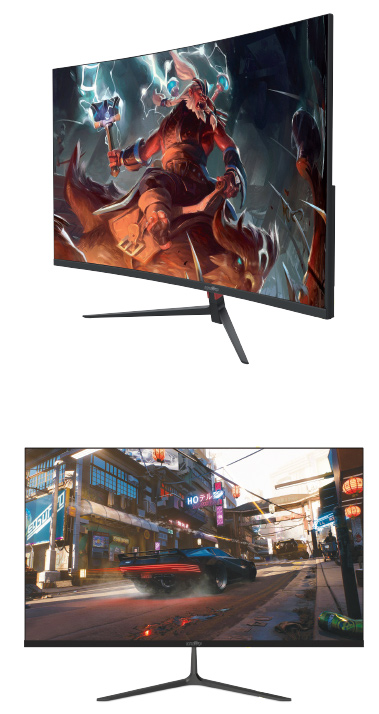
LEVEL UP has two gaming monitors on the market. The 27" model, curved and flat, incorporates AMD Free Sync adaptive synchronization technology, which prevents overlapping images when rendering on the screen and reduces stuttering in frames due to misalignment with the refresh rate of the content; low blue light impact; 178/178 viewing angle and -5°/15° tilt; viewing area of 597,888 × 336,312 millimeters; resolution (Typ.) FHD 1920×1080 at 165 Hz; 0.3114' dot pitch; 16.7 million colors; 250 cd/m2 brightness; 1000:1 contrast ratio and VESA pattern for mounting.
The Gamer 24" Full HD model, also with AMD Free Sync and Low Blue Light, has as its main features Ultra vivid/Flicker-Free/Cross hair; HDR/Over Drive; viewing area of 527.04 x 296.45 (mm); FHD 1920X1080 resolution at 144 Hz; 1.07 billion colors; brightness of 250 cd/m2; response of 1 ms; 5000000:1 contrast; HDMI 2.0 + DP + USB + audio output and VESA pattern connectivity.
VIEWSONIC AIMES STRONGLY AT THE GAMER SEGMENT
"The monitor market has been responding very well. For us, 2021 was a very good year and 2022 was better, registering an increase in sales especially in the second half," said Marcos Paredes, Territory Manager of ViewSonic.
Paredes recognized that although during the pandemic there was great demand for monitors due to teleworking and distance education, the return to school and the office led to a significant demand from people who found the monitor an entertainment center. “The demand for gamer monitors even surpassed that of other verticals, becoming the number one segment,” he graphed, adding that ViewSonic is focusing on the Docking monitor with USB-C technology, which makes it the connectivity center for all desktop peripherals. “We can quickly and simply connect our notebook to the Docking Monitor and we have all the tools to work comfortably on our desk, like with the VG2456a model,” he added.
The lawsuit and the plaintiffs
"The 24" monitor is a standard in our markets, and although it maintains significant demand, 27-inch and larger monitors are gaining ground," Paredes defined. "Today we need to have several windows open at the same time and a large screen is essential, even to increase our productivity."
The impact of gaming
The executive distinguished more than one type of gamer. "There is the enthusiast, who needs a monitor with more than 144 Hz refresh rate and 1 ms response time, he said. "But also the advanced gamer who is looking for monitors with superior technologies, such as 260 Hz and 0.5 ms response time, curved or flat, 24" or up to 34". It all depends on what the preferred game is. Today 48% of the total share of our brand are gaming models.”
The technology
Although he recognized that the refresh rate is important, Paredes highlighted other aspects that make for a more realistic experience, such as Quantum Dot, a technology that incorporates a laminate of nano particles in the display and achieves a unique realism. “Also the HDMI 2.1 technology, which means we can play with a 4K image while maintaining a cup of refreshment above 120 Hz, which makes it an ideal monitor for game consoles like PlayStation or Xbox,” he concluded.
"The monitor market has been responding very well. For us, 2021 was a very good year and 2022 was better, registering an increase in sales especially in the second half," said Marcos Paredes, Territory Manager of ViewSonic.
Paredes recognized that although during the pandemic there was great demand for monitors due to teleworking and distance education, the return to school and the office led to a significant demand from people who found the monitor an entertainment center. “The demand for gamer monitors even surpassed that of other verticals, becoming the number one segment,” he graphed, adding that ViewSonic is focusing on the Docking monitor with USB-C technology, which makes it the connectivity center for all desktop peripherals. “We can quickly and simply connect our notebook to the Docking Monitor and we have all the tools to work comfortably on our desk, like with the VG2456a model,” he added.
The lawsuit and the plaintiffs
"The 24" monitor is a standard in our markets, and although it maintains significant demand, 27-inch and larger monitors are gaining ground," Paredes defined. "Today we need to have several windows open at the same time and a large screen is essential, even to increase our productivity."
The impact of gaming
The executive distinguished more than one type of gamer. "There is the enthusiast, who needs a monitor with more than 144 Hz refresh rate and 1 ms response time, he said. "But also the advanced gamer who is looking for monitors with superior technologies, such as 260 Hz and 0.5 ms response time, curved or flat, 24" or up to 34". It all depends on what the preferred game is. Today 48% of the total share of our brand are gaming models.”
The technology
Although he recognized that the refresh rate is important, Paredes highlighted other aspects that make for a more realistic experience, such as Quantum Dot, a technology that incorporates a laminate of nano particles in the display and achieves a unique realism. “Also the HDMI 2.1 technology, which means we can play with a 4K image while maintaining a cup of refreshment above 120 Hz, which makes it an ideal monitor for game consoles like PlayStation or Xbox,” he concluded.
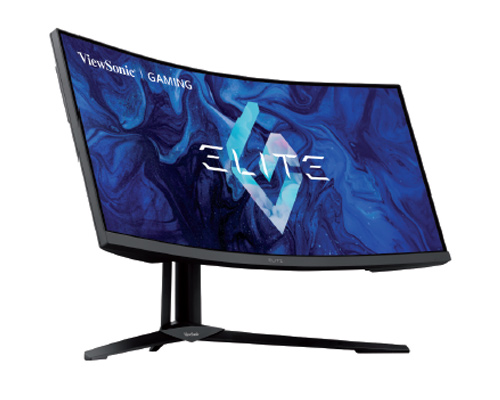
What's next from ViewSonic: Among its upcoming releases, ViewSonic highlights the 34" XG341C-2k curved gaming monitor with 200Hz Mini LED UWQHD. It has AMD FreeSync Premium Pro, 1152 display zones for maximum visual performance, VESA DisplayHDR 1400, 200 Hz OC refresh, HDMI 2.1 connection, USB Type-C port, 2K ultra wide and 1500R curved screen for ultimate immersion. The VX3218C-2K features AMD FreeSync, 165 Hz, 1 Ms (MTPR), 1500R, QHD and speakers.
SAMSUNG
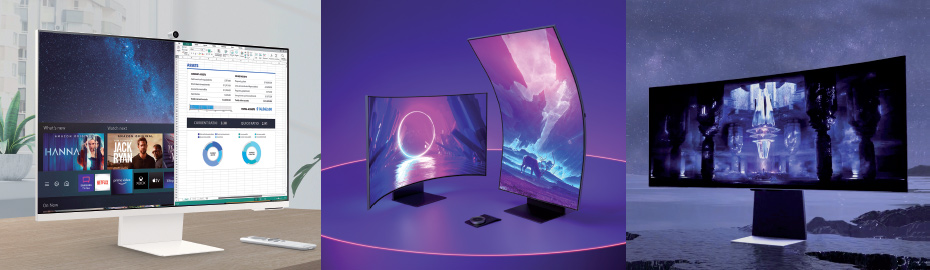
Two Samsung options in the Odyssey series. Samsung highlights the Odyssey ARK with a 55" curved screen compatible with 4K, 165 Hz refresh rate, 1 ms response (GtG) and AMD FreeSync Premium Pro. It includes Quantum Matrix that gives ultra-precise control of the LEDs and the screen can be adjusted between 55" and 27" and the ratio between 16:9, 21:9 and 32:9. It comes with a control that works with solar energy and Xbox Game Pass, for Play from PC, console or cloud with up to three or four screens with Multi View mode.
The Odyssey OLED G8 is Samsung's first OLED gaming monitor available in 34” with Quantum Dot, 0.1 ms response and 175 Hz refresh. It has a 1800R 21:9 curved display and Ultra-wide QHD (3,440 x 1,440) resolution.
The M8 32" flat 4K Smart Monitor is ideal for viewing content, streaming applications, working and chatting over Wi-Fi without connecting a PC. The design is minimalist, and it has a Slim Fit camera with angle adjustment or detachable. Samsung's smart monitors include Adaptive Picture technologies, which adjusts the brightness to the surrounding light, and Adaptive Sound +, which together with the 2.2-channel speakers, offer realistic sound that adapts to the content and ambient noise.
Two Samsung options in the Odyssey series. Samsung highlights the Odyssey ARK with a 55" curved screen compatible with 4K, 165 Hz refresh rate, 1 ms response (GtG) and AMD FreeSync Premium Pro. It includes Quantum Matrix that gives ultra-precise control of the LEDs and the screen can be adjusted between 55" and 27" and the ratio between 16:9, 21:9 and 32:9. It comes with a control that works with solar energy and Xbox Game Pass, for Play from PC, console or cloud with up to three or four screens with Multi View mode.
The Odyssey OLED G8 is Samsung's first OLED gaming monitor available in 34” with Quantum Dot, 0.1 ms response and 175 Hz refresh. It has a 1800R 21:9 curved display and Ultra-wide QHD (3,440 x 1,440) resolution.
The M8 32" flat 4K Smart Monitor is ideal for viewing content, streaming applications, working and chatting over Wi-Fi without connecting a PC. The design is minimalist, and it has a Slim Fit camera with angle adjustment or detachable. Samsung's smart monitors include Adaptive Picture technologies, which adjusts the brightness to the surrounding light, and Adaptive Sound +, which together with the 2.2-channel speakers, offer realistic sound that adapts to the content and ambient noise.
LENOVO
 The Lenovo Legion Y32p-30 monitors, designed for gamers, have a 32" screen with QHD resolution (2560 x 1440); 178° viewing angle; 165 Hz refresh rate and 4 ms response time in addition to AMD FreeSync Premium technology, which synchronizes the monitor's refresh rate with the frame rate of AMD Radeon graphics cards.
The 27” Lenovo L monitor has slim bezels and a metal stand, In-Plane Switching panel, combined with a 107% sRGB color area ratio and 99% sRGB color gamut, 75 Hz refresh rate, 4 ms response time, two 3-watt speakers, two HDMI 1.4 ports and one VGA port.
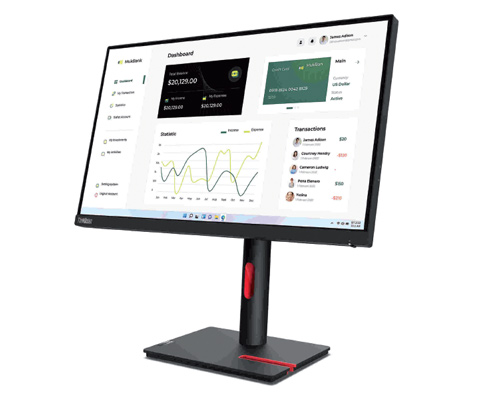
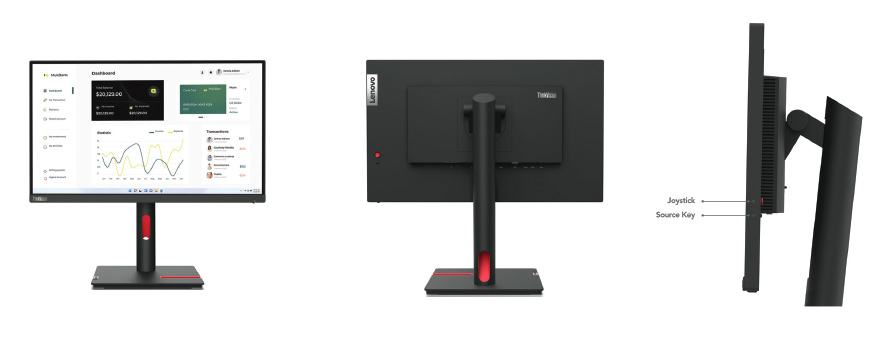
ThinkVision T23i is a versatile 23" monitor, In-Plane Switching panel and anti-glare display with 1920 x 1080 resolution. It has ultra-thin 3-sided NearEdgeless bezels, support for 16.7 million colors; multiple ports for connection to HDMI, DisplayPort and VGA peripherals, and four integrated USB 3.2 Gen 1 ports. It has a phone holder, minimized square base for cable management and VESA mounting capability.
The Lenovo Legion Y32p-30 monitors, designed for gamers, have a 32" screen with QHD resolution (2560 x 1440); 178° viewing angle; 165 Hz refresh rate and 4 ms response time in addition to AMD FreeSync Premium technology, which synchronizes the monitor's refresh rate with the frame rate of AMD Radeon graphics cards.
The 27” Lenovo L monitor has slim bezels and a metal stand, In-Plane Switching panel, combined with a 107% sRGB color area ratio and 99% sRGB color gamut, 75 Hz refresh rate, 4 ms response time, two 3-watt speakers, two HDMI 1.4 ports and one VGA port.
ThinkVision T23i is a versatile 23" monitor, In-Plane Switching panel and anti-glare display with 1920 x 1080 resolution. It has ultra-thin 3-sided NearEdgeless bezels, support for 16.7 million colors; multiple ports for connection to HDMI, DisplayPort and VGA peripherals, and four integrated USB 3.2 Gen 1 ports. It has a phone holder, minimized square base for cable management and VESA mounting capability.
REPORT / LENOVO
Martín Sánchez (Brand Manager Consumption)
and María Teresa Centurión (Brand Manager SMB)
“THE PANDEMIC WAS A BOOM, BUT DEMAND CONTINUED TO GROW UNTIL 2022”
How did you see the market over the last year, in general terms?
María Teresa Centurión: The technology market is in a constant process of innovation and search for greater performance, and monitors are no exception, being a segment that is still maturing. At the same time, users demand more and more improvements, and to be able to enhance their experiences through high-quality equipment. In this sense, benefits take center stage.
How has demand evolved, in volume and qualitatively compared to the pandemic period, when the jump was conditioned by it?
Martín Sánchez: The pandemic was definitely a boom for the monitor market, however, demand continued to grow steadily until 2022. This speaks of consumers who find in equipment, and particularly in monitors, a solution for different aspects of their lives: whether for home, leisure, such as video games, in corporate environments.
How is the leap in demand in screen sizes taking place? Last year the standard was 24” but we are interested in knowing what happens with the rest of the models.
MS: Without a doubt, the 24" monitor has been gaining space among consumers in recent years. At Lenovo we had a sales percentage of 4% in 2020 in relation to our portfolio. In 2022 it represented 15% of the total score. This trend continues to rise, without relegating monitors of, for example, 21.5" or smaller, which still have preponderance. As for the rest of the models, there is a greater offer in terms of specifications, which vary according to the needs of each user, regardless of the size of the screen. We design monitors that offer a wide range of alternatives, which have cameras, different types of connectivity, incorporating USB or Ethernet connection, multi-screen configurations in a simple way, and, something that we consider essential for the user experience, with a higher image resolution, whether in 2k or 4k. It's in our DNA as a technology company to offer smarter technology for everyone.
We know that the business continues to be greatly impacted by gaming. What do gamers demand and how do they behave taking into account the different types, from amateur to competitive?
MTC: The gamer market has matured a lot, and grown exponentially in recent years. The banner of innovation in visuals is gaming, so much so that companies are beginning to demand this type of features. Today we can find corporate monitors with 100 Hz.
As for gamers, they look for more variables when equipping themselves with a monitor: color accuracy, connectivity alternatives, materials within the frame, among other variables that this universe demands. The monitor is the center of the desk, which is why it is intended to generate synergy and a complete ecosystem with the rest of the accessories. This is what we offer at Lenovo with our Legion family, the leading line in the gamer segment, for players looking for power and a complete experience, from the computer where they play, the monitor, the tower, to the accessories, the keyboard, the mouse and the headsets, among others.
Within technological advances, how do factors such as the refresh rate evolve, which in the gamer segment becomes more important. What standard does the market have and where is the evolution projected in the immediate future?
MS: We see great advances in the market with respect to visuals. As new graphics cards come out, the visual itself evolves. The trend we project is that 4k visuals move from 144 Hz to 165 Hz/240 Hz, and 240 Hz/280 Hz QHD monitors move towards 360 Hz. We know that these are changes that happen quickly, and at Lenovo we are at the height and at the head of these transformations, accompanying and leading the trends in innovation.
What profile do you currently see in the curved monitor market?
MTC: Although the curved monitor began as a marked trend among users in the gaming sector, we are beginning to see it on a commercial level. Several companies choose curved monitors as they improve productivity, providing a human field of vision that does not allow details to be omitted, enabling faster and more accurate reading.
How did you see the market over the last year, in general terms?
María Teresa Centurión: The technology market is in a constant process of innovation and search for greater performance, and monitors are no exception, being a segment that is still maturing. At the same time, users demand more and more improvements, and to be able to enhance their experiences through high-quality equipment. In this sense, benefits take center stage.
How has demand evolved, in volume and qualitatively compared to the pandemic period, when the jump was conditioned by it?
Martín Sánchez: The pandemic was definitely a boom for the monitor market, however, demand continued to grow steadily until 2022. This speaks of consumers who find in equipment, and particularly in monitors, a solution for different aspects of their lives: whether for home, leisure, such as video games, in corporate environments.
How is the leap in demand in screen sizes taking place? Last year the standard was 24” but we are interested in knowing what happens with the rest of the models.
MS: Without a doubt, the 24" monitor has been gaining space among consumers in recent years. At Lenovo we had a sales percentage of 4% in 2020 in relation to our portfolio. In 2022 it represented 15% of the total score. This trend continues to rise, without relegating monitors of, for example, 21.5" or smaller, which still have preponderance. As for the rest of the models, there is a greater offer in terms of specifications, which vary according to the needs of each user, regardless of the size of the screen. We design monitors that offer a wide range of alternatives, which have cameras, different types of connectivity, incorporating USB or Ethernet connection, multi-screen configurations in a simple way, and, something that we consider essential for the user experience, with a higher image resolution, whether in 2k or 4k. It's in our DNA as a technology company to offer smarter technology for everyone.
We know that the business continues to be greatly impacted by gaming. What do gamers demand and how do they behave taking into account the different types, from amateur to competitive?
MTC: The gamer market has matured a lot, and grown exponentially in recent years. The banner of innovation in visuals is gaming, so much so that companies are beginning to demand this type of features. Today we can find corporate monitors with 100 Hz.
As for gamers, they look for more variables when equipping themselves with a monitor: color accuracy, connectivity alternatives, materials within the frame, among other variables that this universe demands. The monitor is the center of the desk, which is why it is intended to generate synergy and a complete ecosystem with the rest of the accessories. This is what we offer at Lenovo with our Legion family, the leading line in the gamer segment, for players looking for power and a complete experience, from the computer where they play, the monitor, the tower, to the accessories, the keyboard, the mouse and the headsets, among others.
Within technological advances, how do factors such as the refresh rate evolve, which in the gamer segment becomes more important. What standard does the market have and where is the evolution projected in the immediate future?
MS: We see great advances in the market with respect to visuals. As new graphics cards come out, the visual itself evolves. The trend we project is that 4k visuals move from 144 Hz to 165 Hz/240 Hz, and 240 Hz/280 Hz QHD monitors move towards 360 Hz. We know that these are changes that happen quickly, and at Lenovo we are at the height and at the head of these transformations, accompanying and leading the trends in innovation.
What profile do you currently see in the curved monitor market?
MTC: Although the curved monitor began as a marked trend among users in the gaming sector, we are beginning to see it on a commercial level. Several companies choose curved monitors as they improve productivity, providing a human field of vision that does not allow details to be omitted, enabling faster and more accurate reading.
THINKVISION T23I-20, DE LENOVO
The ThinkVision T23i-20 is a 23" monitor with In-Plane Switching panel and anti-glare screen. It has an ultra-thin design, 3 2-millimeter Near Edgeless sides; multiple ports for peripherals and ergonomic support. Lenovo's exclusive ThinkColour software allows you to effortlessly adjust the settings with the mouse. The IPS screen has a resolution of 1920 x 1080 and supports 16.7 million colors, offering you blacks plus deep and brighter whites. It brings various connectivity options such as HDMI, DisplayPort, HDMI, DisplayPort and VGA ports and four USB 3.2 Gen 1 ports, one of them compatible with BC 1.2 that facilitates fast charging.
With TÜV Rheinland Eye Comfort certification, the screen reduces flickering and blue light emission and minimizes eye fatigue. It also has a phone holder and VESA mounting capacity to keep your desk tidy.




Latest news




Outstanding sector