GE develops technology to detect COVID-19 through mobile devices
The National Institutes of Health (NIH) awarded a grant to develop sensors smaller than a fingertip to detect [...]


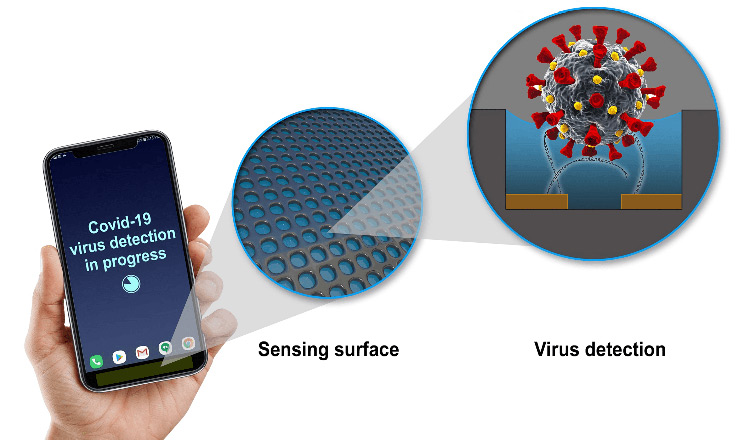
The National Institutes of Health (NIH) awarded a grant to develop sensors smaller than a fingertip that can detect the presence of COVID-19 virus nanoparticles on screens, tables and other surfaces.
GE Research's multidisciplinary team will build on years of development and commercial success of industrial physical, environmental, gas and biosensor monitoring.
The team's work has been published in the journals Nature Electronics 2020 and Lab on a Chip 2021.
Building on a successful suite of sensing technologies that have resulted in field demonstrations and a commercial launch for industrial monitoring, GE Research has received a 24-month NIH grant (U01AA029324) to use the RADx-rad program to develop miniature sensors that can detect the presence of nanoparticles of the virus that causes COVID-19 on different surfaces.
“One of the first lines of defense against any virus is to avoid exposure, which is easier said than done when you can't see it,” said Radislav Potyrailo, GE Research's principal scientist and NIH project investigator. “Through our project with the NIH, we are developing a sensor to detect the presence of COVID-19 that is small enough to be embedded in a mobile device.”
Potyrailo added: "We all come into contact with different surfaces throughout the day, from computer screens and conference tables, to kiosks at the airport and, of course, credit card machines in stores while shopping. While everyone does a great job keeping these surfaces clean, we want to add an extra layer of safety so we can detect the presence of the virus that causes COVID-19."
Over the past decade, Potyrailo and GE Research detection teams have made significant progress in developing miniature detection technologies that provide superior performance and detection capabilities similar to high-end analytical instruments found in a typical laboratory.
“We have developed tiny sensors smaller than a fingertip that have the same detection capabilities as high-end analytical instruments that are the size of a microwave oven,” Potyrailo added. “By offering this sensing capability of a conventional high-end analytical instrument in such a small factor, we can consider sensing applications that could be deployed on surfaces like a mobile phone or even smaller devices.”
Potyrailo noted that the innovative detection technology being developed is extremely reliable and good for detection without interference from other elements. “Our sensors are like bloodhounds,” Potyrailo added. “We train them to detect a specific thing, and they can do it without anything else diverting them from their goal.”
As part of the two-year project, the detection team will demonstrate reliable detection of some nanoparticles of interest, such as those related to COVID-19, in the presence of various types of interference.



Latest news



Outstanding sector