Argentina invests US$20 million to produce chips and technology: what will they be used for?
Argentina will have a new factory with the latest technology. US$20 million were invested.


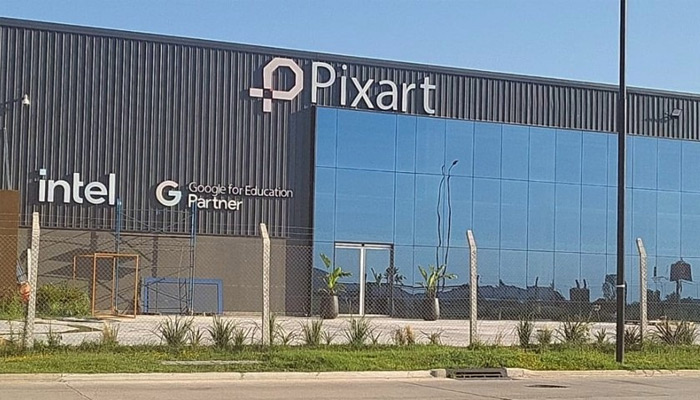
The first smart factory in the Latin American region was inaugurated and will be installed in Argentina. The opening was in the Escobar Industrial Park. The company in charge is Pixart and the announcement was attended by the Minister of Economy, Sergio Massa, and the Secretary of the Knowledge Economy, Ariel Sujarchuk.
The new facilities will manufacture advanced chips, as well as computers and components for various devices. The company will work in alliance with Google and Qualcom, and powered by Intel.
The start of chip production will begin in parallel with its inauguration, and will be under an automated and sustainable development scheme since it will have ten engineers who will operate a total of 36 robots from a control tower.
The factory will work on energy sustainability through the use of solar panels. The focus, as far as manufacturing goes, will be on hardware equipment for the national government and state-owned companies.
"It is a pride to see that our country can produce and export using cutting-edge technology, entering industry 4.0, having a development centrally mounted on robotics, and also producing goods that are central to the future of Argentina and the world. This represents selling knowledge, talent, capital investment and Argentine work. And that every dollar that we sell of Argentine labor to the world generated in this and other factories, will undoubtedly demonstrate that courage, decision, risk and thinking about the country, to the short or long, they have a reward,” Massa remarked.
For his part, Ariel Sujarchuk said: "What we are going to produce is something that has never been done in Argentina. These components are going to allow us to have computers at a better price with greater access and distribute them not only in the country, but also in Latin America and the world. This is the possibility for Argentines to grow and to show all our undo potential and we are achieving it," he highlighted.
How the factory will work
The company represented an investment of more than US$20 million. In addition to chips, the Pixart firm is in charge of the production of Google's Chromebook computers and was in charge of the production of the equipment that fueled the “Connect Equality” plan.
Based on current projects, among which is the daily production of more than 1,500 notebooks, the company achieved a turnover of US$80 million in 2022.
The opportunity for Argentina
For some years now, the chip market has been experiencing a global crisis. The cause of the global crisis is a combination of different factors, but they highlight the snowball effect of the COVID-19 pandemic that hit supply chains hard and the trade war between China and the United States (especially the restrictions on the SMIC company) as well as the 2021 drought in Taiwan, the country that leads chip manufacturing in the world.
According to a 2021 Goldman Sachs analysis, 169 industries have been affected by the global chip shortage. The automotive and consumer electronics industries being the most affected.
Although the crisis seems to be easing, growth prospects are not good for everyone. Experts expect investment in microchip development to increase between now and 2025, especially in the South Korean and Chinese markets, while it is also expected to stabilize in Taiwan.
Due to international competition, the low cost of Asian semiconductors and the high investments required by semiconductor factories, chip manufacturing projects previously failed in countries such as Argentina and Brazil.
What are chips and what are they for?
A microchip is an integrated circuit or a small structure made of some semiconductor material. The most used currently is silicon. This is why microchips are also known as semiconductors. Electronic circuits are manufactured on this material using the photolithography technique, that is, the transfer of a pattern from a photomask to the surface of a silicon wafer in crystalline form.
Subsequently, this wafer is coated with a plastic or ceramic encapsulation provided with metallic conductors whose function is to enable the connection between the integrated circuit and the printed circuit board.
The input is used in practically all technology implementations, from cell phones and computers to industrial equipment.
The Chronicler



Latest news


Outstanding sector