
Air conditioners, good expectations throughout the market
With the World Cup changing seasons, this season air conditioners are going to compete commercially with televisions. Companies know this, but they still prepare to give their best offer.


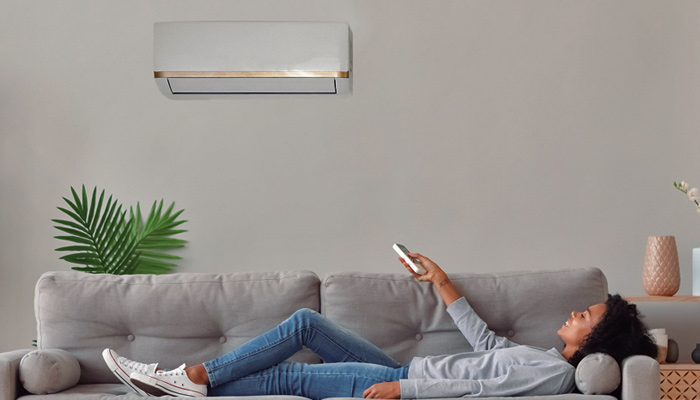
With the World Cup changing seasons, this season air conditioners are going to compete commercially with televisions. Companies know this, but they still prepare to give their best offer.
Por Rodolfo Pollini
The air conditioning business is approaching a particular season. It is the first time that in the retail checking account, and the pockets of consumers, the category competes with televisions. On the other hand, Central Bank regulations can modify the scenario financially.
“For us, 2021 was a great year, with a growth of 45% compared to 2020 in the manufacturing of our own equipment and for third parties”said Diego Calomarde, marketing manager of Aires del Sur. "Although we have an important growth perspective, I do not think that this year the market will grow too much. There is a world cup and both brands and consumers are going to be more focused on televisions. The perspective of our growth, of 20%, is supported by the orders we have and allows us to expect an increase in market share as a factory."
Gustavo Brusa, director of the Argentina Home Business at BGH, recalled that the season was atypical and delayed, because the strong heat wave in January produced a peak that doubled the demand of the previous January. Regarding the market, and considering the last 12 moving months, it estimated a volume of 1.25 million units. “This year, although supply tends to stabilize, the situation is far from returning to the predictability it had before the pandemic,” he concluded. “Flexibility to adapt to the market context will continue to be a highly relevant factor.”
“Last season was excellent, with a production of almost one and a half million units and a very similar sell out, so only the natural stock remained, no more than 15% of the inventory”said Diego Gorali, in charge of the category at Newsan. “Since practically everything has been sold, it is expected that if conditions like the Ahora 12 continue this year we will have a similar market.”
“2021 was a very good year for air conditioning,” said Juan Velásquez, product analyst at Midea Carrier. "After the growth in demand in 2020, it was a great challenge. A large part of the population renovated their homes and another important factor is inflation and the gradual depreciation of the exchange rate, which affects consumers' willingness to buy durable goods as a safeguard. The 2021 market had slight growth compared to 2020.”
consumption
According to Calomarde, the market is focused on 12,000 BTU models. “It is a market mainly for on/off products, although Inverter is growing,” he added. "Aires del Sur was historically managed in the specialist channel and we have a different background from the market in general. With the 12,000 and 18,000 BTU lines we manage ourselves very well, our strength being the Inverter system, which is growing with our brands, especially with Electra. Our last advertising campaign showed that consumers consider us experts in the field and recommend us, which is logical since our call-rate is really very low." “The splits maintain a predominant role, with 85% share,” said Brusa. "The market is practically focused on hot and cold models and the share is concentrated in the 3000 refrigerator models, with 64%, followed by the 2300, with 16%; 4500, with 13% and 5500, or larger, with 7%. The Inverter models are gaining share, they have a 25% share and the share of the compact ones remains at 15%.
Gorali maintained that the World Cup in the middle of the air conditioning season influences the financial capacity of retail and the consumer. “For the first time, businesses have to pay for their purchases of conditioners and televisions at the same time and the same thing happens to the consumer,” he explained. "This is unprecedented, but in favor we have that the consumer seeks to acquire goods to get rid of the pesos. If we add that the interest rate of Ahora 12 is lower than that of inflation, the consumer also finds a benefit on that side." Analyzing the mix, Gorali said that 80% remains with splits, 10% are window ones and another 10% are portable ones. “Within the split, 30% have Inverter technology, which is growing but not at the speed of Brazil or Mexico, more than anything because of the rates, which if they are deregulated will surely accelerate the demand for this technology,” he concluded. “Demand is more seasonally adjusted due to the works, 30% of the volume is made in winter, but there is also a lot of purchase of financial support from retail, which invests the pesos collected from sales accelerating purchases, and this is also seasonally adjusted.
Velásquez expects growth, although it is not clear what effect the sale of televisions will have. "What happened in January of this year will have a lot of weight, with very high sales due to the heat wave, he added. "The purchase of goods as a safeguard of value also has an important effect. Split Inverter is gaining market share and is expected to continue like this. It currently has a 25% stake. The increase in rates can be important in the decision between purchasing an inverter or a traditional equipment.




Latest news




Outstanding sector