
Osvaldo Malvestitti, head of Red del Sol: “The pandemic forces businesses to join networks”


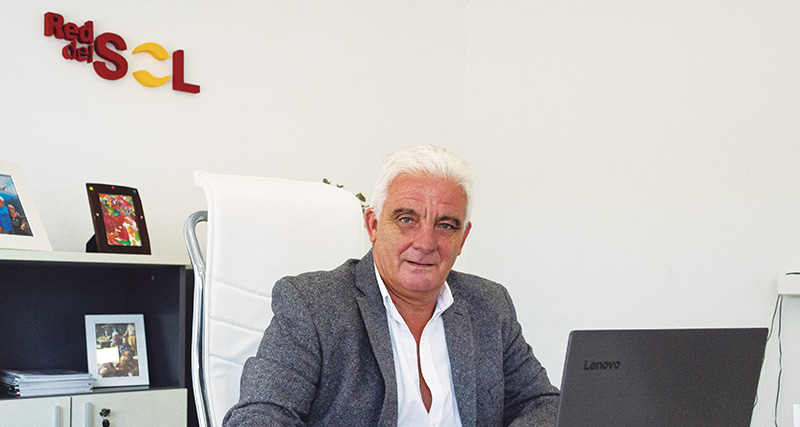
In the words of Osvaldo Malvestitti, owner of Red del Sol, last year he had a strange performance. “The market ended with lower sales in units than the previous year in all its areas,” he said. “But the feeling of the businesses was that their sales were increasing, because the supply was less than the demand.”
Without an adequate supply of merchandise, as a result of the impact of the COVID-19 pandemic, many sales were lost. “There was a worrying drop in warehouse stock, using our own stock to be able to meet what was missing from the supplier,” continues the businessman. “On the other hand, a financial mismatch was also verified in retailers, who had to use the advance cash modality for almost the entire year, in many cases receiving the merchandise with a 60-day wait,” he indicates. "Fortunately, the supply was better for our associates than individually, which improved sales in most of them. In fact, Red del Sol had a 30 percent growth in new members. This has to do with the need of businesses that are alone. Today, the pandemic forces them to integrate networks," he insists.
By Hernán Murúa
What numbers emerge from comparing the quantities and amounts of your sales with what you had budgeted and also with what you actually marketed the previous year?
In units, the market fell an average of 15 to 20 percent in all areas. There were some exceptions with areas where the drop did not exceed 10 percent. But in others it was greater than 20 percent. This had to do with regional factors specifically. In pesos, the turnover was higher than the officially reported inflation. The fact is that product cost increases, on average, exceeded inflation rates. Hence that phenomenon.
What changes had to be made in management?
Ingenuity had to be sharpened. Our network brings together more than 500 branches, of which more than 50 percent are located in small inland towns. The idiosyncrasies of the consumer, added to the technological inconvenience of some areas, forced us to educate businesses, and they their customers, to buy virtually. The online purchases that many of our merchants developed, plus some particularities of each one in terms of attempts to approach the customer through Instagram, telephone sales, Facebook and WhatsApp that helped so that the situation was not serious in the worst months.
Virtualization accelerated…
We feel that the virtual thing helped us a lot to give us the push we needed. Today, many of our businesses are well prepared to sell online.
Was a modification verified in the demand?
With the stay at home incorporated into all the people who complied with it, there were needs and demands for products that could be found in our stores. Fitness, LED, cell phones, notebooks, tablets, mattresses, furniture, living room games, personal care and small appliances were the most in demand in our sector.
What was the most complex to solve?
Understand omnichannel. Creating different sales channels in businesses that only did so in person was not easy at all. Luckily, a high percentage achieved it. It was also necessary to understand the change in consumer habits. We had to go look for it with the tools we had and that we created, understanding what they needed.
What projections do you have for 2021 and based on what indicators are they supported?
I will try to ensure that what may seem like pessimism is seen as a vision of reality. We do not see substantial changes for the first six months, at least. First, due to the complex situation of imports of inputs and finished products from our suppliers; second, the damages that we may have if COVID-19 infections increase, which could place us, businesses and suppliers, in situations similar to those of last year, and as a last piece of information, the purchasing power of the consumer that may be deteriorated. Regarding consumption, the election year could help to continue promoting it. The question is whether it will be possible.




Latest news

Outstanding sector