Integrated X+ celebrated its seventh edition with more than 900 participants
The supplier fair, organized by Grupo Márquez, Red del Hogar and Grupo Gaona, brought together more than 70 exhibiting companies and received more than 200 merchants from different parts of the country, along with representatives of the main purchasing groups in the sector.


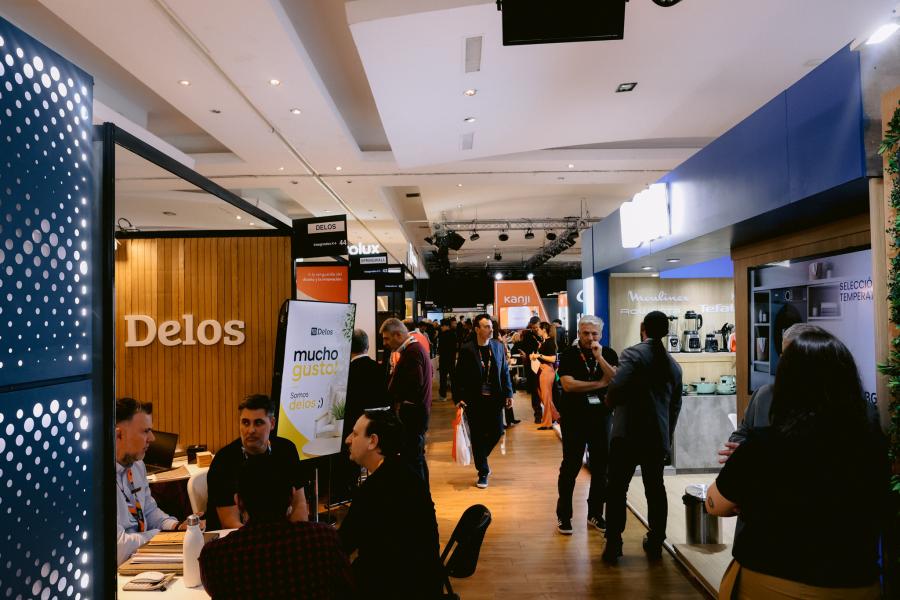
The Integrated Suppliers Fair X+ held its seventh edition on the days August 5 and 6 at Goldencenter, Parque Norte, with more than 900 participants throughout the two days and a record number of exhibiting companies.
Organized by Márquez Group, Home Network and Gaona Group, the meeting was also attended by Uninor Group, GrupHogar, Cooperativa Mar y Sierras and Grupo Haedo. More than 200 merchants from different parts of Argentina participated in an edition that, in a challenging context for the market, showed greater attendance and expanded meeting opportunities between suppliers and buyers.
The exhibition brought together more than 70 companies, between household appliance brands, suppliers, financial entities and banks, who presented products, news and commercial proposals.
Training and business
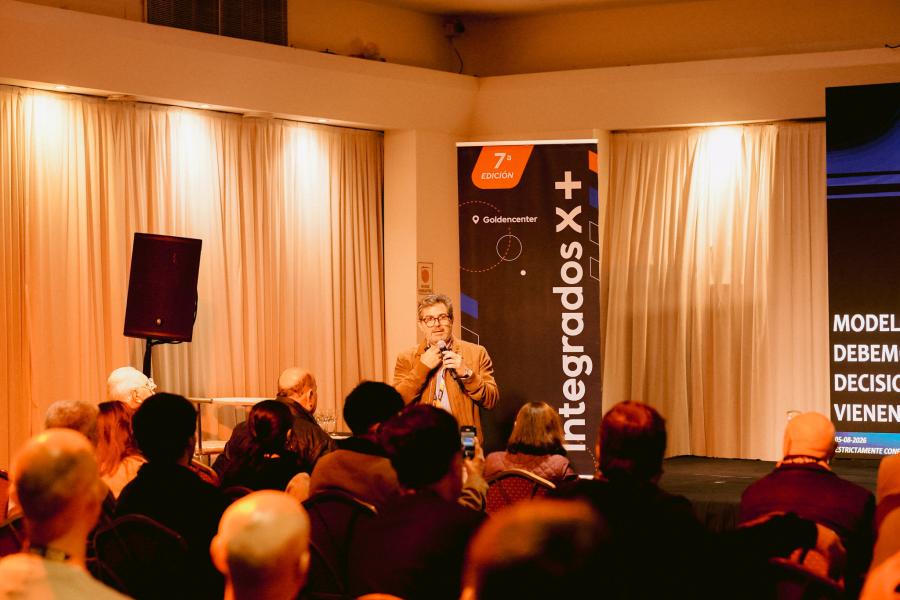
The first day began with a cycle of training and talks. Fagsistems y Novatech presented launches and market perspectives, while the economist Javier Mutal provided a situation analysis aimed at the members of the different groups.
The official opening was led by Carlos Costi, president of Red del Hogar; Rodrigo Herrero, vice president of Grupo Márquez; and Marcelo Lischinsky, president of Grupo Gaona.
During the second day, the activity focused on negotiations between suppliers and buyers, with meetings to advance commercial agreements and learn about the latest developments in the different categories.
Integrated X+: the view of its organizers on the present market and the challenges that lie ahead
Integración Magazine spoke with Carlos Costi, president of Red del Hogar; Rodrigo Herrero, vice president of Grupo Márquez; and Marcelo Lischinsky, president of Grupo Gaona, who took stock of the seventh edition, analyzed the changes in consumption and business dynamics and anticipated the main objectives for 2027.

A balance marked by growth
For the organizers, the seventh edition of Integrated X+ once again highlighted the value of generating joint spaces between merchants, purchasing groups and suppliers.
Carlos Costi, president of Red del Hogar, highlighted that the meeting went beyond the commercial exhibition. “It leaves us with a new experience and shows us, even more, how convenient it is to be together,” he said. In that sense, he valued the presentations of the companies about the reality of the activity and the participation of the economist Javier Mutal, who provided his perspective on the Argentine situation.
For its part, Rodrigo Herrero, vice president of Grupo Márquez, focused on the sustained growth of the proposal: "This event that we have been doing together for seven years is on an increasing scale. Every time we manage to bring more suppliers and the rooms are becoming too small." Looking to the future, he maintained that the objective is to continue adding companies, partners and buyers.
Marcelo Lischinsky, president of Grupo Gaona, highlighted the commercial movement registered during the days. “In all the stands we saw merchants buying, asking questions and getting advice,” he said.
He also noted as one of the highlights of this edition the incorporation of financial and technological companies to the traditional presence of appliance and furniture companies, thus expanding the tools and solutions available to businesses.
What the sector says: new habits and greater competition
When analyzing the current scenario, the three leaders agreed that the market is going through a stage of transformation that requires reviewing strategies and strengthening the relationship between suppliers and merchants.
Costi defined the market as “very sensitive” and stressed the importance of building relationships of trust. “We try to do the best business, get the best prices and ensure that suppliers are paid in a timely manner,” he explained.
In this context, the president of Red del Hogar also highlighted the role that purchasing networks play in supporting independent businesses in an increasingly competitive scenario. "Today it is not enough to just get a good price. We have to help commerce to be more competitive in all aspects: in purchasing, in financing, in management, in marketing and also in the way of reaching the consumer," he said.
Along these lines, he maintained that generating scale and sharing tools becomes increasingly important. "An SME business alone often does not have the resources or the negotiating power to face all these challenges. When we group together we can access better conditions, become more professional and adapt more quickly to market changes," he explained.
For Costi, the transformation of the sector does not necessarily imply a loss of opportunities for traditional commerce, but rather the need to evolve. "Commerce is changing, but it doesn't mean it has less of a future. It means we have to prepare to compete in a different way," he said.
Herrero, meanwhile, added that companies face a “paradigm change” and highlighted the importance of maintaining long-term strategic alliances with suppliers.
The growth of new marketing channels also appears among the main challenges. Lischinsky referred to the multiplication of online competition and the need to reach a greater commitment between the parties to operate in this new scenario.
Purchasing habits are also part of the transformation. "Today a consumer can buy a microwave at two in the morning from their cell phone. Before, they waited for us to open at nine," Herrero exemplified. For the manager, this reality forces us to differentiate between a drop in consumption and a change in the way in which that consumption is realized.
Added to this panorama is the pressure on profitability. According to Lischinsky, the drop in the average ticket coexists with fixed costs that continue to grow. “This pushes us to meet more often, group together and buy better, because if we buy poorly today, we lose profitability,” he summarized.
The 2027 challenge: deepen joint businesses
With their sights set on 2027, the organizers anticipated that the next step will be to deepen joint work and take advantage of the volume represented by the groups to access better commercial opportunities.
“Our real focus is the business,” said Herrero, who highlighted that the three organizing groups represent around 300 outlets. In this framework, one of the objectives will be to strengthen communication and coordination to generate larger scale operations.
Costi agreed that the evolution of Integrated X+ is also reflected in the proposals that companies bring to the fair. "Before it could be more about creating a brand presence. Today, suppliers have to bring motivating businesses that generate concrete purchasing opportunities," he said.
The experience accumulated during these seven editions also left a shared conclusion: Negotiating jointly allows us to achieve greater volumes and access better conditions and prices.. That will be one of the main challenges for the next stage. “If we manage to agree on large purchases together during the year, 2027 can be formidable,” Lischinsky concluded.




Latest news

Outstanding sector