Peabody continues to accompany Buenos Aires culture
As a result of an agreement between the Ministry of Culture of the City of Buenos Aires and Peabody, the Parque Centenario Amphitheater was reopened with sold out seats for the two performances of Carmina Burana.


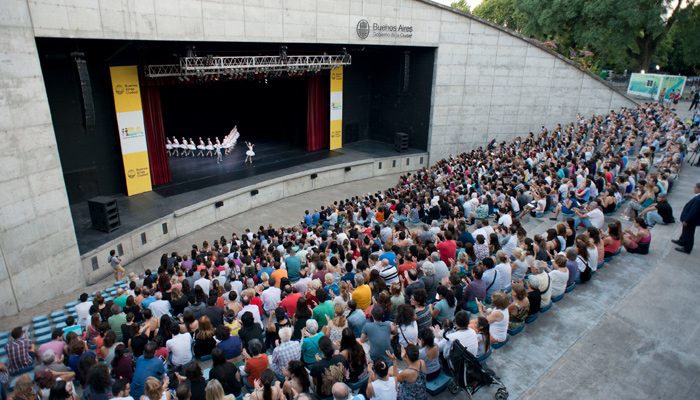
As a result of an agreement between the Ministry of Culture of the City of Buenos Aires and Peabody, the Parque Centenario Amphitheater was reopened with sold out seats for the two performances of Carmina Burana.
With two performances of Carmina Burana starring the Ballet Stable of the Teatro Colón, The Parque Centenario Amphitheater reopened its doors after renewing its infrastructure. The works were carried out together with the Peabody appliance brand, within the framework of the sponsorship law of the City of Buenos Aires.
The comprehensive development and revitalization of the Amphitheater, which has more than 70 years of experience, included an improvement in the technical and aesthetic conditions of the place, which accompanies the project of the City Ministry of Culture to promote a programming of quality artistic events for all audiences.
This Peabody accompaniment to Buenos Aires culture, which will cover a period of two years, It arises in the context of celebrating the brand's twentieth anniversary. The company highlighted that it intends not only to contribute to the beautification and modernization of the amphitheater facilities, but also to actively support Argentine art and the country's various cultural expressions, elevating the experience with cutting-edge technology.
In addition to its support to improve the infrastructure, it committed to carrying out various activities and shows that will be proposed by the same brand. "With this sponsorship we reaffirm, once again, our mission as a brand, which goes beyond excellence in products; we also seek to actively contribute to the cultural enrichment of Argentine society", said Dante Choi, president of Goldmund S.A.
Among the various changes in space infrastructure and technology, Equipment was incorporated for internal telecommunications of the areas and to perfect the sound of the shows. Lighting was also added to the stage to improve the quality of the shows and the public and artist bathrooms were restored.
In addition, the façade of the stands and hallways leading to the stage and the external signage of the amphitheater were updated, and air conditioning equipment will be added to the different staff work areas.
The Amphitheater has capacity for 1,640 spectators and a stage measuring 18 by 12 meters plus an orchestra pit measuring 18 by 5 meters. It has a 9 meter high lighting grill, a 17 by 7 meter projection screen (front and back) and a sound and lighting booth at the FOH. In addition, it has warehouses, four VIP dressing rooms and two general ones and even has a workshop under the stage for the stage crew, two maneuvering bridges on each side and 6 curtains with a central opening. Outside of the scenography, the administration and technical offices also coexist in this space; fire safety system and public toilets for women, men and the disabled.
Unlike the original Amphitheater, whose stage overlooked the lake, the current space is a construction completely integrated into Centenario Park. Its entrance is through Lillo Street and its intersection with Leopoldo Marechal.
The original building was inaugurated on March 25, 1953 under the name Eva Perón Amphitheater. The first performance was the opera Aída by Giuseppe Verdi, the same one that inaugurated the Teatro Colón in 1908. The Centenario Park property was designed by the prestigious landscape designer Carlos Thays and inaugurated at the beginning of the last century to celebrate one hundred years of the country. It is also the largest green lung in Caballito, the most densely populated neighborhood in the City, with 200 thousand inhabitants.




Latest news

Outstanding sector