
Pablo Feresini, General Director of Grupo Rotoplas: “We are going to continue investing to increase efficiency, productivity and scale”
Report to Pablo Feresini, General Director of Grupo Rotoplas.


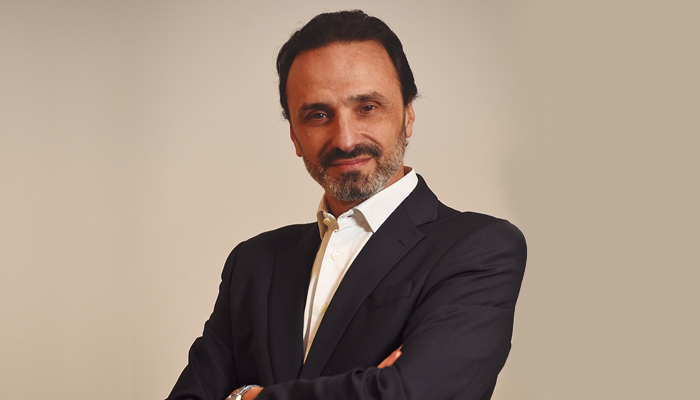
Por Rodolfo Pollini
How does Grupo Rotoplas analyze the current market for hot water products?
It is a very stable market. Despite that, we come from a couple of years in which it surprisingly grew at double-digit levels, due to the effect that durable goods had during the pandemic. As people spent a lot of time in their homes, using the refrigerator or shower more, the useful life of these products was shortened or it was decided to renew them. The hot water market was not immune to this movement during the pandemic and post-pandemic, but since the last quarter of last year the trend began to decrease.
Although hot water tanks and water heaters are replacement products, the construction, when activated, modifies that behavior quite a bit. Is it helping now?
Construction is a great driver of white goods. We follow that market a lot for the group's other items and we saw that the second half of last year ended with a sharp drop. It did not impact the cumulative figure for the year, which ended up between 5% and 10% growth, because the first semester had been good. But according to the Construya index, which measures the dispatch of materials, in the first quarter of this year there was a drop of 6.6% compared to the first quarter of 2022, a trend that if maintained will lead to a year with construction on the decline.
How do your different products participate in current demand?
Argentina changed a lot and in a short time. In three years the electrical product market has greatly intensified. In the last ten years you had 60% gas products and 40% electric and today, on average, we talk almost about the opposite. There is an evolution that is partly due to the fact that new constructions are increasingly turning to electricity and that there are areas where gas does not reach.
How is the share, or demand, which is usually moved by cultural consumption patterns, distributed between water heaters and hot water tanks?
Demand is quite stable. Whoever takes out a water heater replaces a water heater and the same thing happens with the hot water tank. We did not detect large migrations. We do see that a market is beginning to appear, although still very niche, with boilers. It is very incipient, less than 5% of the hot water market.
VISION OF THE FUTURE
Rotoplas is a Mexican group that in the last four years invested more than 120 million dollars in Argentina. “We continue to invest in the expansion of our hot water tank factory and those for storage, pipes and everything that has to do with the water cycle,” said Feresini. "We are opening a new logistics center, we are going to total 5 locations and more than 750 people working. We are going to continue investing to increase efficiency, productivity and scale. We have room to grow and in different categories."
Emphasis is being placed on the need to save energy and technological and perception changes are appearing. With water heaters without a pilot light we now realize how much that little flame consumes, almost imperceptible. How do you see these changes developing?
The automatic heater, without a pilot light, had started very strongly four years ago and that momentum was diminishing, but it is an important advance because that little flame burning all year round and all day is a considerable consumption. This comes very much from the subsidies that the consumer had for a long time, in Buenos Aires, basically, and that did not allow those small savings to be valued, which are not so small when you have rates without subsidies. To the extent that rates become more realistic, people will promote technological changes like this one regarding water heaters.
Are there plans to apply pilot light technology to hot water tanks as well?
No, this technology is applicable only to water heaters. It is not impossible, but technologically it is very complicated to apply it in hot water tanks.
Do you see other upcoming changes within this industry, always talking about the contribution that technology makes?
I think the next move, and not too far away, is to incorporate the IoT, the Internet of Things. We are studying alternatives to incorporate this type of technology but looking for benefits, because innovation does not have to serve for marketing but rather to give benefits to the consumer, in the pocket or in practicality, something that is not so easy to find if you only think about connecting an appliance to Wi Fi to give it a use that will never be needed.
They have had a new plant since last year. Is it already fully operational?
Yes of course. In April of last year we inaugurated the Pilar plant, where we make hot water tanks, with the presence of provincial and national officials. It is a completely new plant, with cutting-edge technology that allows us to manufacture a hot water tank every 30 seconds.
They also export.
Yes, with IPS, but we export pipes and connections, nothing to do with hot water tanks for now. The plant that we inaugurated allows us to leverage ourselves and we are studying the possibility. Today we export to fourteen countries, including several in Africa, and those markets are the ones we are exploring to also export thermo-tanks.
By producing a hot water tank every 30 seconds, they must already have the productive capacity.
Yes. Today we only supply the domestic market with more than 40% market share working with two shifts, which leaves us room to continue growing because we can work overtime or incorporate a third shift.
How are the lines positioned?
Beyond the Sapphire line, which is our flagship product and with which we have 70% of our portfolio, a couple of years ago we set ourselves the task of starting to venture into the medium segment with the Black line, which was very well received by the market because it is a very solid product, with a very pretty color and very good and unique features for its segment, digital thermometer, high recovery and very high efficiency levels. We maintain our Family line, in gray and we have a somewhat niche product which is the Dual water heater, gas and electric, which connects to the gas network, plugs in and you decide when you want to use it with gas or electricity. As it has double resistance, you can also choose to use just one or both. We are the only ones who have it and we want to continue promoting it. Last year we launched the water heater without a pilot light, a very reliable product that aims at efficiency and for the healthcare channel we launched the water heaters with the Rotoplas brand.




Latest news




Outstanding sector