
Most companies plan to use AI in their production processes
Artificial Intelligence (AI) will be the protagonist of technological projects in 2022, with a floor of 60% of companies in the country that plan to incorporate it [...]


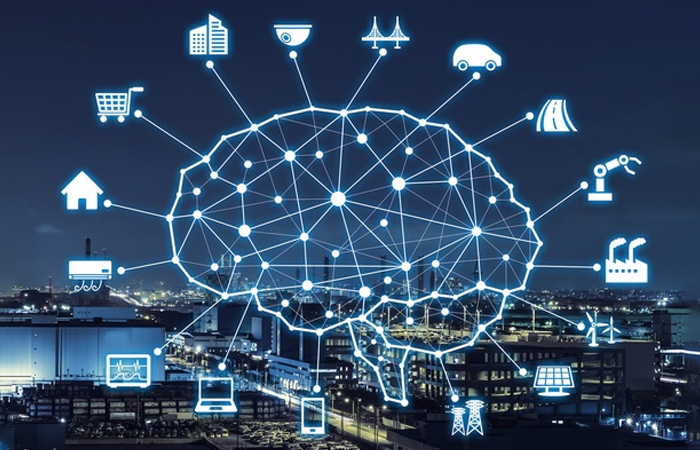
Artificial Intelligence (AI) will be the protagonist of technological projects in 2022, with a floor of 60% of companies in the country that plan to incorporate it in some of their production processes, according to different consulting firms.
“In Argentina, more than 60% of organizations are in the exploratory phase seeking to incorporate artificial intelligence into some of their processes,” according to a survey by IBM Watson.
The automation and virtualization of processes, which combines robotics, Industrial Internet of Things (IIoT), digital twins (virtual representation that serves as a real-time digital counterpart of a physical object or process) and 3D or 4D printing, will be one of the key trends for this year, according to the Argentine company Baufest.
In addition, he indicated that “it is expected that by 2022 there will be 600,000 installations of industrial robots and that 70% of manufacturers will use digital twins regularly.”
In this company's vision, artificial intelligence applied to training machines to recognize patterns and interpret and act "promises to improve customer satisfaction through new interfaces and interaction methods."
It estimated that by 2024, more than 50% of user interactions will be complemented by speech, the written word, or AI-powered computer vision algorithms.
Among the trends that have to do with the future of programming, the emergence of “software 2.0” (programs written by machines) is anticipated, which will enable the “rapid expansion and dissemination of new data-rich and AI-driven applications with possible uses in the automotive industry, entertainment and financial services.”
Strictly speaking, Artificial Intelligence is present in many daily tasks, "it not only recommends series and songs, but also writes prologues, writes notes, detects the number of Covid cases that may enter a sanatorium within two weeks and can identify cases of potential school dropout in a teenager," stated the Argentine software company Rocking Data.
This firm highlighted that “the more data, the greater the possibility of implementing algorithms in different areas and with higher quality”, in a context in which data traffic is expected to continue increasing this year.
Rocking Data emphasized that unlike the political-economic context that allowed the growth of the internet, social networks and even cryptocurrencies away from regulations, “in the world of 2022, this initial idea becomes increasingly difficult to sustain” and that “the great challenge is to provide security to users and governments without restricting its use and distribution.”
From IBM, Guillermo Treister, head of Artificial Intelligence Solutions for the region, pointed out that in Argentina “almost half of the companies (41%) accelerated the deployment of artificial intelligence during the last year” for example with the incorporation of “virtual assistants” to manage calls or communication channels.
“According to the same survey, 80% of companies worldwide said they planned to implement some form of automation software over the next 12 months,” he said.
In his opinion, in 2022 “as adverse factors such as the pandemic and supply chain crisis continue, we could see the emergence of a variety of new AI innovation use cases as the technology progresses to deal with challenges such as gaining consumer trust.”
Virtual assistants “became a fundamental tool for large organizations and governments during the pandemic,” both for disseminating information and for organizing vaccination appointments, among other solutions implemented by States and the private sector.
For its part, Dell Technologies identified seven relevant trends for this year and in most of them AI and the Internet of Things play a fundamental role.
Of the seven trends, they expect a strong development of Edge Computing projects, private mobility because in their vision “it will accelerate the opening of the ecosystem and more cloud and IT industries will be seen involved in the path to 5G”; data management and, accompanying all areas in development, security.
“These four areas (Edge Computing, Private Mobility, Data Management and Security) raise the need for the integration of both public and private cloud-based systems,” they indicated.
The Economist



Latest news


Outstanding sector