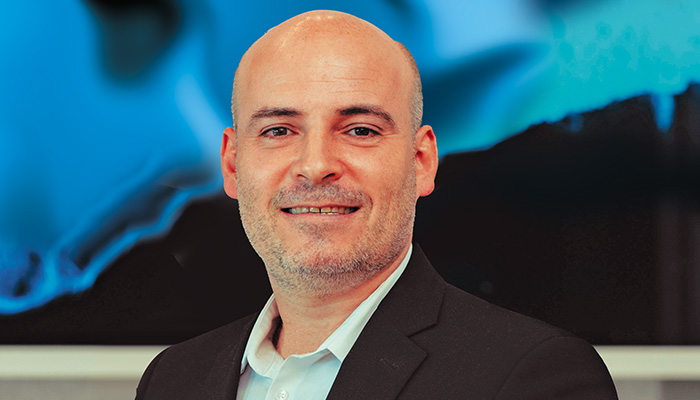
Enrique Laffue: “LG transformed its corporate strategy, going from selling hardware to becoming a Smart Life Solution Company”
With the CEO of LG in Argentina we analyzed the perspectives of the company's technological present and the recent launches at the CES in Las Vegas.


COVER NOTE
With the CEO of LG in Argentina we analyzed the perspectives of the company's technological present and the recent launches at the CES in Las Vegas.
Por Rodolfo Pollini
Last year was atypical. How did you see 2023, in general and from LG in particular?
I think that last year we were blind among the blind, because even though we had many problems transferring currency and paying, we managed to accumulate many shipments of merchandise in the first semester and we had a good supply until the third quarter. As of the fourth quarter, our inventory in the channel was half of what we had at the beginning of the year. The sell out numbers were good, we had several commercial successes, we led the central air conditioning category and we did very well with Inverter technology, where we competed for the lead but we played in a value product market, where we do not have clear competition. Our new C3 OLED line also received very good feedback and we continue to dominate the category.
Television had a particular year, because the interannual comparison must be made against a World Cup year, when in general the market grows a little and can advance purchases for the following year.
It was a year where demand was very dynamic, although in 2022 around 70% of television sales were made in 12 installments and in 2023 the financing was only 3 and 6. Despite this, the business had a good reaction, of course incomparable with 2022, when we did 20% of the sell out in November. 2023 was a worthy year and only at the end we had a hard fall. Sales were maintained, because the consumer identifies our products with dollars, and since they cannot save in dollars, they prefer to invest in these durable goods, but they are products that do or do need financing.
How is the OLED category evolving?
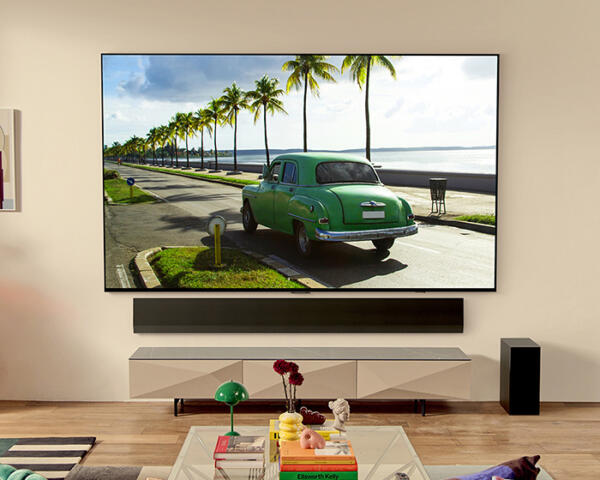
In OLED televisions we do not have very strong competition in the country and it did very well for us. In 2021 it represented 6% of LG television sales in value, in 2022 it reached 9.4% and already represents 17% of LG television turnover in Argentina.
Do you already see OLED aiming to be a standard and displace LED from the industry?
LG launched OLED in 2013, initially intended for televisions and representing only a small part of the industry at the time. However, in 2023 OLED already represents 3.3% (1) of the global television market, 13.2% (1) of LG's global television sales and has expanded to mobile devices, tablets, PC monitors, digital signage, automotive infotainment and notebooks, among others. LG remains the leader in the Latin American OLED market, with a market share of approximately 84.3%, and in Argentina it exceeds 80%. Furthermore, OLED technology is expected to grow, representing 10% in the next 5 years and in the next 10 years to challenge the leadership of the outgoing technology, LED, which is currently the predominant one.
At this year's CES they introduced the transparent wireless TV. Was it the most disruptive thing you brought to Las Vegas?
Yes, it was the most disruptive product of ours and of the entire fair, but we have had transparent screens for a long time and in the corporate sector we have also had transparent OLED for quite some time. It is a technology that has many possibilities of use and an impressive future. That gives us the vision that perhaps in 4 or 5 years any glass can become a digital screen. This television is wireless, resistant, transparent and will soon be touch-sensitive. Imagine that in 5 years the windshield of a car can also be the dashboard, even tactile.
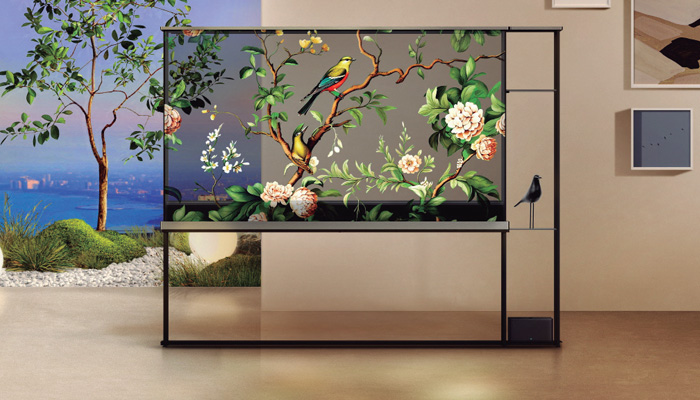
The transparent OLED television, one of the novelties presented by the company at CES 2024,
would arrive this year in Argentina. In Las Vegas, LG also presented smart monitors
MyView with LG IPS 4K displays, intuitive interface and borderless design.
I understand that this transparent television incorporates a new processor. Is it already part of LG's commercial offer in global markets?
Shipments will begin between May and June, and we anticipate that, along with the C4 line, the product will be available in Argentina during the third quarter of the year. Our commitment to innovation is reflected in the annual advances in our technology, and the Alfa processor is a clear example of this. This processor goes beyond simple software management; It is designed with advanced capabilities to enhance image quality. In a market where multiple TVs can share similar screen specifications, the Alfa processor makes a difference. It improves communication with the graphics card, thus optimizing the visual representation of content and achieving deeper and more defined contrasts, which translates into a superior visual experience for the user.
In 2017, LG set the ambitious goal of reducing its carbon emissions by 50% by 2030, and through various sustainability activities, such as tree planting, it aims to achieve carbon neutrality by that same date. As part of this global commitment, all LG subsidiaries in different countries carry out concrete actions and report their environmental impact.
In Las Vegas they also exhibited the Signature M4, up to 97 inches, with a refresh rate that reaches 144 Hz, an interesting factor especially for the world of gaming.
Yes. We already have the M series available in our LG Store in Belgrano and in Las Vegas we presented the entire 4 series. It is important to be completely transparent regarding the refresh rate: although we offer televisions with 144 Hz, the reality is that most of the content and existing game consoles do not exceed 120 Hz. Therefore, beyond that figure, we enter a field of features that are not yet essential for the average user, similar to what happens with 8K televisions, for which there is little content available.
In addition to television technology, an exhibition focused on other types of products was also held in Las Vegas.
We presented an innovative barista coffee machine designed for capsules and there was a presentation on artificial intelligence (AI) with the aim of offering solutions based on user needs. Likewise, we highlight our commitment to sustainability, showing how we use recycled materials in our products and how we process waste in our plants, to create new products and closing the life cycle of materials in a responsible and ecological way.
"Inverter is already a standard and yet we differentiate ourselves with Dual Inverter, which gives a little more savings than the regular Inverter. Although in Argentina more than 60% of air conditioners are still On Off, over time they will be replaced by Inverter," said Laffue, predicting the near future of this technology.
How are sustainability and environmental protection policies designed?
In 2017, LG set the ambitious goal of reducing its carbon emissions by 50% by 2030, and through various sustainability activities, such as tree planting, it aims to achieve carbon neutrality by that same date. As part of this global commitment, all LG subsidiaries in different countries carry out concrete actions and report their environmental impact. In Argentina, for example, around 1,000 trees were planted last year. Additionally, LG has set a goal of using 100% renewable energy by 2050. The company is focused on replacing energy generated by fossil fuels with electrification. LG products are already designed to be energy efficient, which is a fundamental part of its identity. Since 2015, LG has decided to exclusively market products with Inverter technology, notable for their efficiency in saving energy and water and for complying with all environmental regulations, even those that are not mandatory in Argentina.
The Inverter concept, even if they do not know it very technically, is already installed in the perception of users of the products.
It is already a standard and yet we differentiate ourselves with Dual Inverter, which gives a little more savings than the regular Inverter. Although in Argentina more than 60% of air conditioners are still On Off, over time they will be replaced by Inverter.
You mentioned financing and for now the Cuota Simple plan, with interest and few installments, is not enough to help the consumption of technological products, which have high prices in relation to average income.
The simple installment interest rate is 95% compared to an interannual inflation of 254. In 2023 the values of the products of our industry were relatively cheap compared to other products, but starting at the end of the year, and in relative terms, they became very high. This change in the price of products is contrasted with the evolution of the minimum wage, which rose to 193 dollars in December 2023, compared to 358 at the end of 2022. The devaluation of the official exchange rate, which occurred in December, negatively affects the purchasing power of salaries and its recovery is usually slow.
According to RIPTE (Average Taxable Remuneration of Stable Workers) indicators, a salary recovery of between 100% and 120% is expected for June. If the crawling peg policy (gradual adjustment of the exchange rate) maintains the devaluation at a rate of 2% or 3% monthly, it is anticipated an improvement in purchasing power relative to the dollar value of the industry's products. Based on these expectations of salary recovery and stabilization of the exchange rate, it is expected that the demand for these products could only begin to recover by mid-year.
So far in 2024, all markets fell. Is there an estimate for how much?
In the first 9 weeks, year-on-year we had drops in units of 30% to 40% and in some products of up to 70%. But we believe that little by little it will recover.
What happened or is happening with audio?
It is a category that suffered a lot after the December devaluation; its demand is very elastic to changes in the economy, as it is a more dispensable good. In general, 2023 had a good year, but 2024 began with a sharp year-on-year drop in sell outs, more than 60%.
Laffue highlighted that LG remains the leader in the Latin American OLED market, with a share of approximately 84.3%, and in Argentina it exceeds 80%. Over the next 10 years, OLED is expected to challenge the leadership of LED, which is currently the predominant technology.
We all already have the concept of Technology 4.0 installed, which is perceived to be very tied to the connectivity and interconnectivity of products. How do you see this scenario, in general, and how does LG fit into it?
LG has made a significant transformation in its corporate strategy, moving from focusing on the sale of hardware to becoming a “Smart Life Solution Company”, reflecting its new focus on offering comprehensive solutions to improve the quality of life of its customers. With an annual turnover of approximately $160 billion, LG has several divisions, including one that generates more than $10 billion in solutions for the automotive industry.
In addition to being known for its televisions and displays, LG has developed and markets its own operating system, WebOS, which it also licenses to third parties. The company manufactures and sells 100 million products a year, all designed to be interconnected, and is focused on the integration of these devices to offer new applications and services.
In the home sphere, LG uses the ThinQ application to allow users to manage and control their smart devices, such as televisions, washing machines, refrigerators and air conditioners. This application works as a universal remote control, allows product registration and makes it easy to request after-sales support, thus improving the user experience and reinforcing LG's vision as a provider of smart solutions for everyday life.
Is this app already installed and in use?
In Argentina, a large part of our products already have this solution. Possibly in one or two years LG could be a content provider, because we have a very large critical mass to connect all the devices, data and services we provide.
In addition, LG is working on the transition towards more sustainable and environmentally friendly technologies, particularly in the heating and cooling sector. An example of this initiative is the introduction of the Therma V product, a system that recovers waste heat from air conditioners to generate hot water. This hot water can be used to heat the home using underfloor heating systems and also to provide domestic water.
Artificial Intelligence is already a protagonist, in daily life and in the relationship of companies with users and users with products. How do you see it moving forward?
I give you a practical example from Argentina. Yeah You call our 0800, a machine derecords the call and includes it in a pattern where It emerges, for example, that many consumers They are talking about a product and that goes to the center of design. If you send a WhatsApp asking how to do something with your television, the AI sends you a video link so you can solve it on your cell phone. Today it is typical to enter a chatbot and have to answer 25 questions until it tells you what you want to know; In our WhatsApp, after the second question you have solved the problem, more than 50% of the cases or queries are solved by AI, and the system feeds itself with the questions and learns. The same thing happens with televisions. If you stop watching a series to watch a newscast, a box appears asking you if you want to continue the series where you left off, without having to reconnect with the application where you were watching it. When there are four or five users, we can customize that depending on the voice, the television connects with the user of each person who was using it.
You mentioned before the technology applied to after-sales service, which beyond offering solutions and answers, today is also a good loyalty tool.
Yeah. Although we would like to be even better, in after-sales service and in Argentina we differentiate ourselves from competitors. We have more than 95% of the spare parts at the time they are ordered, because after-sales is part of the product we sell. And we need to exceed the expectations of our consumers.
Both immediately and not, what projects do you have in mind?
We are renewing the audio portfolio, where we have a complete line with Bluetooth speakers and headphones, large battery-powered speakers, towers, mini components, sound bars and, with the release of imports, we will expand the line. In white goods we are going to have many new features. We are going to bring dryers of smaller and larger capacity and in refrigerators we have good expectations with the opening of imports. One of our star products, although we were not able to bring enough quantity until now, is the Insta View Side by Side refrigerator and to the 550 liter refrigerator, with the freezer below or above, we are going to add 330 and 360 liter models. In computing we are at the forefront, from medical monitors for MRIs to the latest for gaming.
A business that has been growing is central air conditioning, where we lead the category, and in digital signage we have expectations that the offer will grow with very high resolution LED screens. In air conditioning we have products of 12, 18 and 24 BTU and we are going to add one of 36. Let's see if we also incorporate the Styler clothes ironing steamer and the Wash Tower, which in a single unit has the washing machine on the bottom and the dryer on top. We presented these two products this year at CES.
In a global concept, how do you see 2024?
It's going to be a year of transition. The consumer is much more conscious when purchasing and much more sensitive to supply and costs, but we are going to work to stay at the top of their preferences, with durable products that, although not top-priced, offer better value for their money. It's going to be a challenging year. We hope that from the second semester onwards, demand will improve a little and that we will have more product supply.
(1) GFK Global YTD September 2023.




Latest news



Outstanding sector