
Electronic Commerce / Report: “Those who see that they have to play a new game will come out stronger.”


The pandemic transformed the annual growth of e-commerce into monthly and is estimated to have advanced the future of this channel by two years. About this, and more, we spoke with Gustavo Sambucetti, Institutional Director of the Argentine Chamber of Electronic Commerce (CACE).
Por Rodolfo Pollini
The pandemic found trained players and those who still did not dare to go online. How do you see the market and the possibilities of smaller players joining electronic sales?
The numbers from recent years gave us an annual growth of 70% to 75% in pesos and more or less 20% in units. During the last months, we had this growth monthly. Those who were prepared capitalized on it and even gained participation, others did not, but I think it is not a question of size but of adaptation and vision. Companies that cling to the way of doing business they had, and see this as something temporary, will have a bad time regardless of their size. Those who see that they have to play a new game and take advantage of what they already have, such as branches, a consolidated brand, logistics and an important customer base, will emerge stronger.
Today it does not seem that the availability of technology is an obstacle.
There is technology for everyone. There are companies that went out to do ecommerce with TiendaNube, which is the most basic, and to the extent that they obtained results, they are seeing how to migrate to a more robust platform. I see it a lot in clothing or food brands and not so much in electronics, where more expensive products are sold and there can be a fear of going in halfway. In that sense, marketplaces are a good alternative, and if I look at it from the brands, not from the retailers, it seems like a very good solution to me.
The marketplace, as a variant of ecommerce, ends up being similar to putting the brand in a shopping center. Does it also help because it lowers the technological cost?
In e-commerce the most expensive thing is not the technology, but getting people to visit your page. Beyond solving the technology, payment methods and logistics, being in a marketplace is like being in a shopping center: you open the store where people are already there. It is part of what is paid with the sales percentage, but bringing people to your site when you just start is very expensive. In any case, I recommend doing both things simultaneously: participating in the marketplaces and setting up the site, because they have different objectives: in the marketplace you generate sales and on your site you interact with the customer, you can launch and position products and publish your complete range. In the marketplace, people buy by product, while on your site you put an offer and sell more of that product but that spills over into sales of related products.
Now there is a lot of talk about dark stores, stores without customer service and intended for production or warehouse and distribution centers. A first advantage that is noted is the possibility of not needing high-cost spaces per surface. What opinion do you have?
I think it is a step prior to a distribution center and varies a lot by category. In home and electronics, where purchases are for a single product, or two products per cart and for a medium ticket upwards, the more centralized you have it, the better. If you have a distribution center, that purchase allows you to absorb a kilometer of logistics and they are not perishable products. A supermarket cart has 55 units and perishables in the middle. The logic of the supermarket is that the distribution centers move pallets or boxes, but the ecommerce order is put together by the branches and for two reasons: because they handle units and they are closer to the customer. The problem is that when you gain volume you have a logistics operation within a physical business. The ideal there is to grow the business from the branch, and when there is an area with sufficient volume you move the operation to a dark store, or to a branch that sells little and has space.
Dark stores put the picker on stage, the person who receives orders, picks them up and delivers them. This leads me to ask you about job creation within ecommerce, taking into account what is always said about technology driving out jobs.
Studies from the United States show that jobs were lost in physical stores but they were gained in distribution centers and customer service, because even if you sell online you need a contact center. In the pandemic, some left the stores closed and with people not working, which is clearly a cost, but on the other hand, as ecommerce exploited them, some put people in attendance in the stores to answer the questions of those who had bought online, or to spread an offer through their networks and contacts under the concept of social selling: incorporating the seller as a direct seller, in the Avon way.
Another current topic is click and collect, buying in a store and withdrawing wherever is convenient for the buyer. It was already done a few years ago. I remember the OCA lockers, for example. How is ecommerce being improved from logistics?
Pickup at a branch or at a point other than home delivery is a growing trend. Before the pandemic, around 50% chose branch pickup and in small electric it was above 60% or 70%. It has to do with saving shipping costs and time management, because the customer picks up when they want and does not have to stay at home waiting. Lockers evolved a lot in Europe and the United States. In Argentina they are not fully developed because the initial investment is very expensive, but networks such as Pickit and Hop appeared, with points where the user can pick up their products and logistics is streamlined. The ecommerce site, instead of going to 100 addresses, goes to 10 and leaves 10 packages in each one and the participating businesses, in addition to charging for the service, generate traffic to their premises.
It has already exploded. What will happen when the shock wave subsides?
Some consumers will want to return to the physical world and others, to the extent they can make their online purchase, will continue to do so. I am convinced that the channels mix and will coexist, but there will be more demand for online services. On the business side there will be an acceleration in this type of projects. When there is supply, demand absorbs it and the market grows.
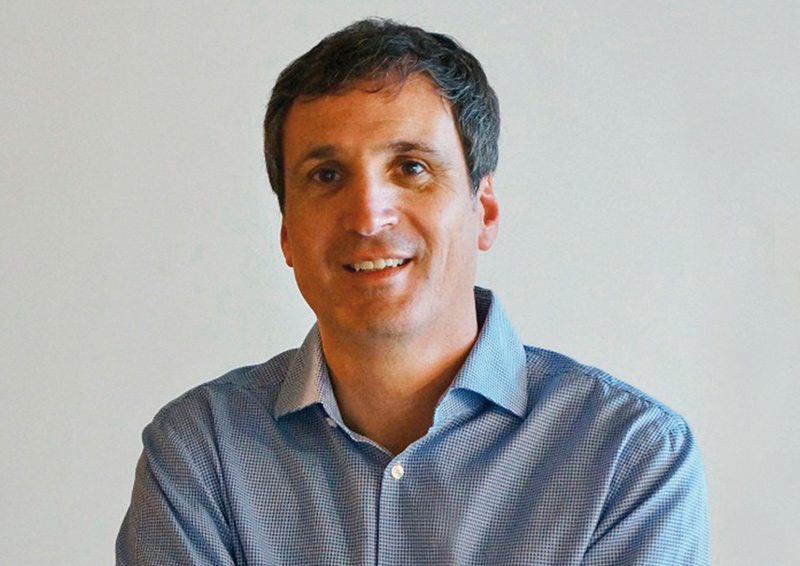
Sambucetti: "Some consumers are going to want to return to the physical world and others, to the extent that they can make their online purchase, will continue to do so. I am convinced that the channels will mix and coexist, but there will be more demand for online services."




Latest news




Outstanding sector