

The third color: the detail that can transform a house
The choice of furniture is one of the central decisions when defining an environment, but color can be the resource that gives coherence, personality and character to each space. How to combine furniture, materials and tones to create balanced and current environments.


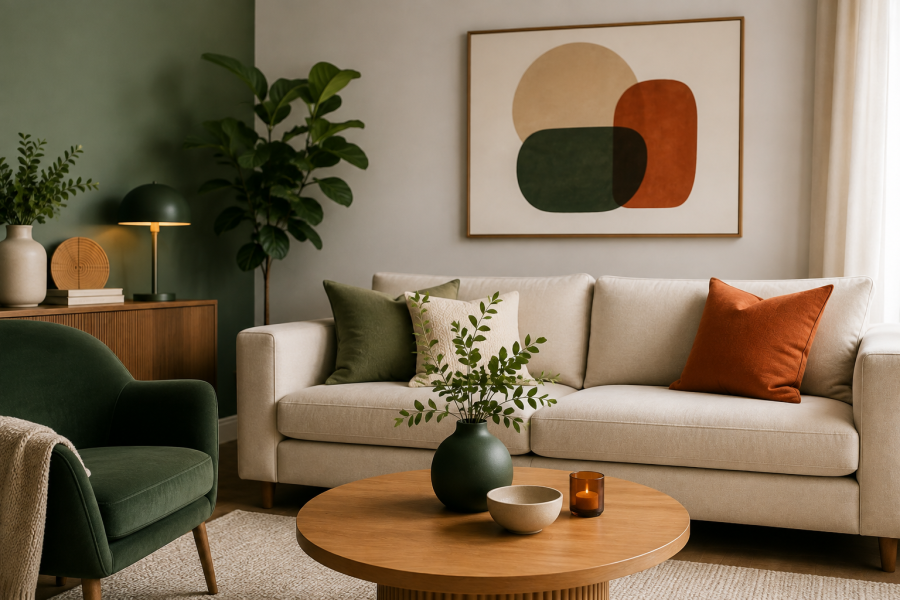
When thinking about decorating a house, choosing furniture is usually one of the first steps. The sofa, table, chairs, bed, storage furniture or TV cabinet not only respond to a functional need: they also build the style and define a good part of the identity of an environment.
In that process, color occupies a fundamental place. Choosing a palette allows you to think about how the different pieces of furniture will interact with each other and how they will integrate with the walls, floors, textiles, lighting and objects that complete the space.
Therefore, rather than choosing furniture and colors as separate decisions, the trend is to think of them as part of the same composition. A sofa can become the starting point of a palette, a wooden table can provide the warm tone that an environment needs or a colored armchair can function as the accent that breaks with a neutral proposal.
Color as a starting point
Defining a palette helps guide the choice of furniture. Neutral tones, for example, offer a versatile base that allows you to play with different styles and materials. Greens, blues and earth tones can add depth, while deeper colors can be used to highlight a particular piece.
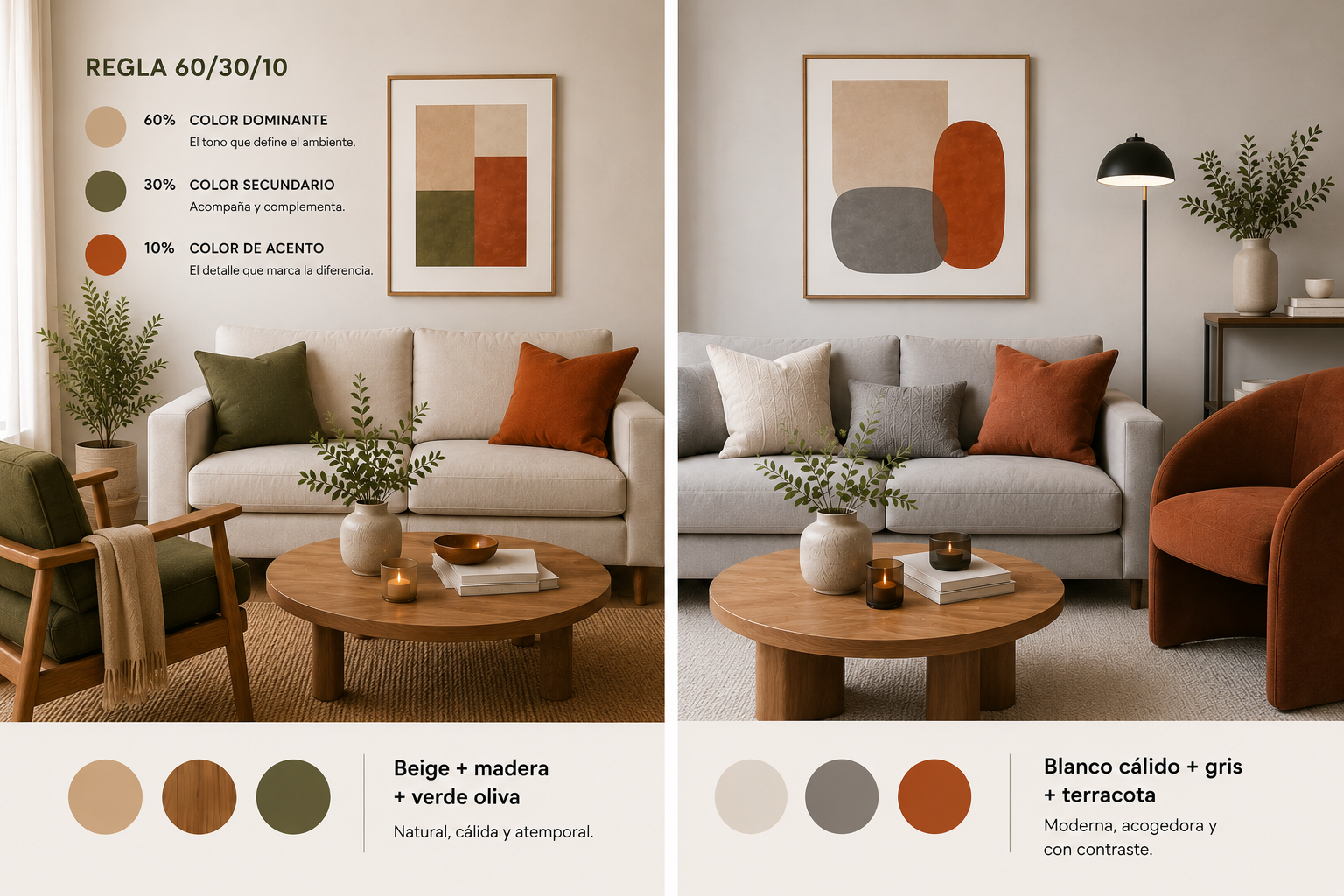
One of the most used references in interior design is the 60/30/10 rule. The formula proposes using a dominant color in approximately 60% of the environment, a second tone around 30% and reserving 10% for an accent color. This is not a rigid rule, but rather a guide to achieving balance.
Applied to furniture, this logic allows us to think beyond the traditional combination. A living room with a sofa in a neutral tone can incorporate a wooden table and add an armchair or an auxiliary chair in a contrasting color. Likewise, a bedroom can combine a neutral base with wooden furniture and textiles that incorporate a third tone.
So, furniture continues to be the main protagonists, while color helps establish relationships between the different pieces.
The third color, the key to transforming environments
The third color can be the element that completes a furniture proposal. It does not necessarily have to appear on a large surface: it can be present on an armchair, a chair, a pillow, a blanket, a lamp, a rug or even a small appliance.
On a basis of beige and woodFor example, olive green provides freshness and a connection with nature. A combination of warm white and gray can gain depth with terracotta, while tones sand and light wood you can find a counterpoint in deep blue.
Choosing that third tone can also help highlight certain furniture. A designer piece, a special armchair or a side table can become the focal point of the environment simply due to its color or the contrast it generates with the rest of the decoration.
This strategy also offers an interesting possibility for retail: Color can become a criterion for choosing and combining furniture. Showing how the same piece can work within different palettes allows you to expand the possibilities of a product and help the consumer imagine it within their own home.
It also allows you to renew the environments without changing all the furniture. Maintaining the main pieces and modifying the color of textiles, accessories or some auxiliary furniture can generate a new reading of the space.
In short, furniture and color are part of the same aesthetic decision. Furniture defines structure, function and style; Color establishes relationships, generates contrasts and provides personality. Finding the balance between both can be the key to building environments that are not only functional, but also reflect the identity of those who inhabit them.




Latest news

Outstanding sector