Samsung Argentina celebrated the closing of the 13th edition of Solve for Tomorrow
Samsung Argentina's educational initiative recognized students who transformed problems in their communities into innovative solutions, through science, technology and creativity.


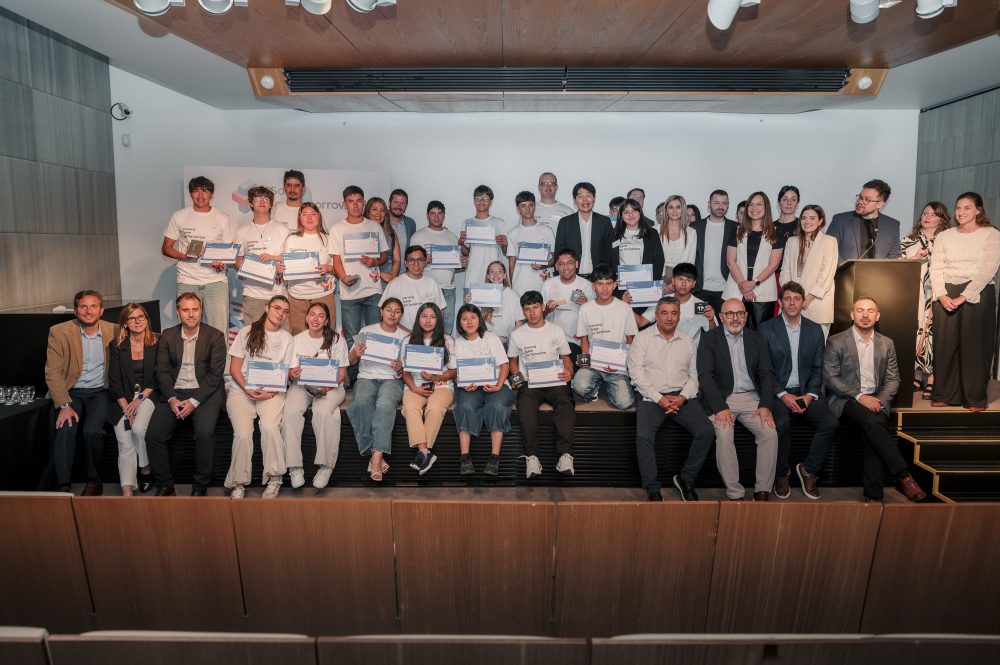
Samsung Argentina celebrated the closing of the 13th edition of Solve for Tomorrow, its global educational program that invites high school students to identify challenges in their environment and develop innovative solutions through technology. and develop innovative solutions through the application of knowledge in Science, Technology, Engineering and Mathematics (STEM). During an in-person meeting held at the Amalia Lacroze Art Collection in Fortabat, in Buenos Aires, the winning team of this edition was announced, among the five finalist projects selected at the national level.
The project EducInclusiva IA, developed by students of Technical School No. 28 “Juan Martín de Pueyrredón”, of Saint Louis, obtained first place thanks to the idea of a web platform that uses artificial intelligence to adapt educational content and activities to the needs of students with different disabilities, facilitating teaching work and promoting more accessible education. The initiative stood out for its ability to respond to a specific problem in its community, based on creativity, knowledge and collaborative work.
For its part, the project of on Ecodest of the Rural Secondary School mediated by ICT No. 5240 of Salta, focused on the creation of a low-cost and easy-to-reproduce distiller that allows treating water with excess salts to obtain water suitable for consumption in a rural community, for which it received a special mention.
The meeting brought together the five finalist teams, who presented their projects before a jury made up of leaders from the educational, scientific, technological and social fields. The day was an opportunity to share the journey of each initiative and learn more about the solutions that the young people developed throughout the program.
The final also featured other projects that reflected the diversity of challenges faced by different communities in the country and the creativity of young people to address them. These were the proposals that completed the selection of finalists for Solve for Tomorrow 2026:
- SISU – School Wellness App – Córdoba: an application that proposes an anonymous emotional recording system to identify trends linked to the well-being of students and bring guidance resources to educational communities.
- School Bioheat – Mendoza: a proposal that transforms agricultural waste into ecological pellets to heat rural schools, taking advantage of resources available in the community and reducing the environmental impact of burning waste.
- Intelligent Network for Water Level Monitoring and Flood Prevention – Buenos Aires: a network of stations with sensors and solar energy that monitors groundwater levels and uses artificial intelligence to anticipate possible floods and generate early warnings.
A day of exchange and recognition
During the final meeting, the teams presented their proposals and shared the research, experimentation and development process that led them to become finalists. The evaluation was carried out by a jury made up of Andrea Renzo, content creator and founder of Tecno.Lógicas; Renata Pertossi, doctor in Biological Sciences and postdoctoral researcher at CONICET; Lucas Gonzalez, programmer and content creator at @lucastechnews; Sebastian Mario Civallero, industrial engineer and secretary of Science and Technology at the University of Buenos Aires (UBA); and Nassi candle, advisor to the Undersecretariat of Environment of the Nation.
"At Samsung we believe that education and technology are fundamental tools to build a future with more opportunities. Each edition of Solve for Tomorrow allows us to learn up close the talent, creativity and commitment of young people from all over the country who identify challenges in their communities and are encouraged to seek solutions. "Behind each project there is an idea, a lot of work and the conviction that it is possible to generate a positive impact on the environment," express Tomás Santiago Cadelago, People Team Director of Samsung Argentina.
A program that promotes new opportunities
In 2026, Solve for Tomorrow featured the participation of 818 teams, which presented 522 ideas through the program platform. As part of its training proposal, and together with Asociación Conciencia and P-per, Samsung promoted 53 Design Thinking workshops in 19 provinces and 29 locations in the country, which reached more than 2,600 students and allowed 500 teachers to be trained.
Since its launch in Argentina in 2014, Solve for Tomorrow has been part of Samsung's Corporate Citizenship strategy and promotes project-based learning, creative thinking and the use of STEM tools to respond to real challenges. Through this initiative, the company seeks to accompany new generations in the development of skills and knowledge that allow them to become protagonists in the transformation of their communities.




Latest news

Outstanding sector