
Trends: Digital payments are gaining ground on credit cards
According to Accenture research, 9% of consumers in major markets choose digital methods as their primary payment option, a figure that will increase to 20% by 2025.


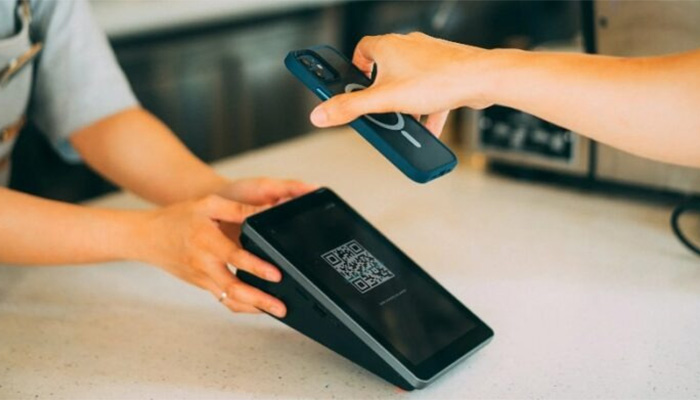
9% of consumers in major markets choose digital methods as their primary payment option, a figure that will increase to 20% by 2025 according to Accenture research.
The new generation of digital payments is growing rapidly due to changes in consumer behavior, technological advancements and innovation. Accenture’s latest global survey of payment consumers, “Personal Payments,” reveals that more than Half of the population in the main markets has used tools such as digital wallets, positioning themselves above credit cards.
Economic turbulence is driving consumers to seek greater control over their payment options. Card issuers that adopt a timid attitude toward payments innovation could lose $89 billion in revenue over the next three years, according to research.
“While cash continues to narrowly dominate point-of-sale transactions, digital wallets, account-to-account transfer (A2A) and “buy now, pay later” (BNPL) are quickly gaining ground in addition to existing media such as debit and credit cards. says Javier González Boix, Executive Director for Banking at Accenture Argentina. Likewise, other methods are gaining momentum and bursting onto the scene. “Although it may seem distant, we should not be surprised that biometric or metaverse payments, machine-to-machine transfer or Web3, arrive sooner than expected and become an active payment methodology,” added the executive.
The report, based on surveys of more than 16,000 consumers in Asia, Europe, Latin America and North America, details that 9% of consumers in major markets currently use next-generation payments, that is, the use of digital wallets, A2A and BNPL, as the main payment option. Likewise, and with a future projection, this figure will increase to 20% in 2025, strengthening the use of payments through Crypto, biometric technologies, machine-to-machine system, and in the metaverse.
If the local Argentine market is analyzed, according to the “2023 Global Payments Report” published by FIS, during 2022 in the country, 36% of e-commerce payments were made by credit card; while if new generation payments are counted, they represented 39% of operations, with 28% corresponding to digital wallets. In terms of projections, by 2026 a 24% increase is expected in the use of new generation methodologies, both those that are established and those that are still being incorporated, such as biometric technology or payments through Crypto or in the metaverse.
“There is consumer enthusiasm for frictionless payment solutions that offer flexibility, speed and ease of use without sacrificing security."explains the Accenture executive. However, he highlights that we must not fail to consider the regulations that are established and updated for the use of the wallets. "Like any technology that changes, today the world of digital payments is not what it was just a couple of years ago. This implies that new parameters and regulations are established, and modify the scenario of action of digital methodologies, impacting, to a greater or lesser extent, also on traditional banking," adds González Boix.
The future of banking
Although customers continue to trust more in traditional banking services, especially for reasons of security, identification and physical location, the use and preference of new generation digital payment systems are gaining ground. This is happening more quickly as users seek to resolve needs that banks could not cover or attend to. Faced with this situation, banking and payment entities have already advanced with their value propositions of digital payments to both individuals and businesses and, on many occasions, they work by allying and complementing each other with the fintech world.
"The challenge faced by traditional payment operators is clear: offer consumers the security of paying anywhere, at any time and in any way. In this sense, the trend is to aim for collaboration between traditional players and fintechs with the aim of providing customers with better services according to their demands," Javier González Boix of Accenture closes.



Latest news


Outstanding sector