Sustainable Mobility Week: the challenge of moving differently
From September 15 to 22, Sustainable Mobility Week once again puts on the agenda the way we move and the impact our daily decisions have. In Argentina, the advancement of new alternatives poses opportunities, but also challenges for cities and their inhabitants.


How do we move? The question, which for a long time was associated almost exclusively with transportation, today incorporates new variables. Environmental impact, efficiency, travel times and even the way in which public space is used are part of a conversation that is increasingly present in cities.
In this context, the Sustainable Mobility Week, which develops from September 15 to 22, invites us to reflect on the different ways of moving and the changes that urban mobility is going through. Walking, using public transportation, riding a bicycle, sharing a vehicle or choosing an electric alternative are some of the possibilities that are part of this process.
More than a trend linked exclusively to caring for the environment, sustainable mobility proposes a change in the way of thinking about daily travel. And Argentina is also beginning to walk that path.
In recent years, electric bicycles, skateboards and electric motorcycles began to become more visible on the streets, while hybrid and electric cars also progressively expanded their presence. Micromobility, in particular, gained prominence for short journeys and as a complement to other means of transportation.
The expansion of these alternatives responds to different factors: technological advances, a greater range of products and a growing interest in finding forms of transportation that can better adapt to the needs of cities. But the transformation does not depend only on the vehicles. It also opens new opportunities to develop infrastructure, services and proposals that accompany these new forms of mobility.
In Argentina, this transformation is already beginning to generate new opportunities around mobility. The growth of electrical alternatives brings with it a greater range of vehicles and services, along with the development of charging infrastructure and new proposals designed for users. As these options gain presence on the streets, the universe of possibilities for moving around cities also expands.
There are also differences between the different cities in the country. The mobility needs of large urban centers are not the same as those of intermediate cities or those where distances are greater. Each territory presents its own characteristics and, with them, different opportunities to incorporate more efficient and sustainable mobility alternatives.
Therefore, moving towards more sustainable mobility does not imply thinking about a single answer. Public transport, bicycles, electric vehicles, shared systems and pedestrian solutions can be combined in different ways according to the characteristics and needs of each city.
The change is also cultural. For decades, the private car occupied a central place in the way we understand mobility. Today, new generations and new consumption models are beginning to focus on access to transportation rather than vehicle ownership.
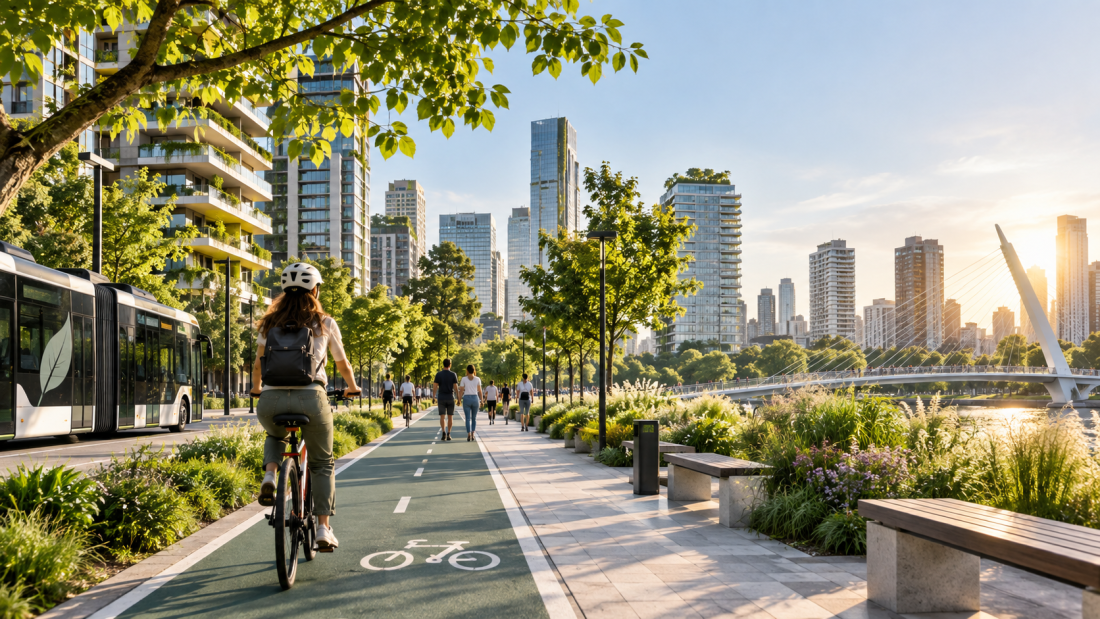
In this scenario, cities have a key role. Cycle paths, pedestrian spaces, public bicycle systems, charging infrastructure and greater integration between different means can make sustainable alternatives increasingly practical for daily life.
Sustainable Mobility Week thus functions as an opportunity to look a little beyond vehicles and think about how we want to move and how we want the cities we inhabit to be.
In Argentina, new alternatives are already part of the urban landscape and show that the mobility of the future will not necessarily depend on a single solution, but on the possibility of combine different ways of moving more efficiently and in accordance with the needs of each city.



Latest news
Sustainable Mobility Week: the challenge of moving differently

Outstanding sector