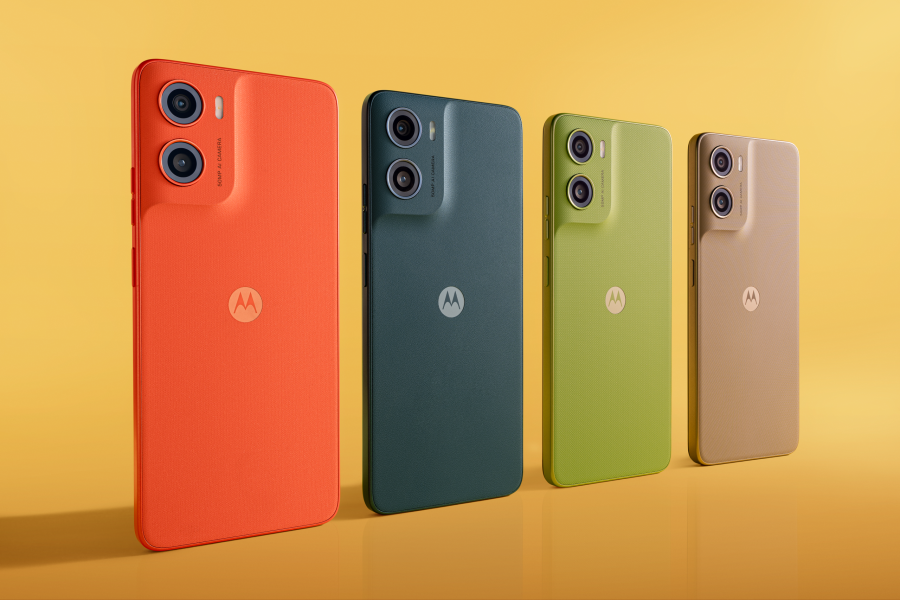
Motorola incorporates NFC throughout its smartphone portfolio
With the new edition of the moto g06, the brand extends this technology to its entire line of devices, from the most accessible models to premium equipment, expanding access to contactless payments and other connectivity functions.


For years, carrying a wallet meant having cash, cards and documents. Today, many of these functions can be concentrated in a single device: the smartphone. Thanks to NFC technology, bringing your cell phone close to a payment terminal can be enough to complete a purchase in seconds, pay for the bus or check in at the airport.
But what exactly is NFC? How does a contactless payment work? Is it different from paying with a QR code? Is NFC only used to make payments? This technology, which has long been associated with premium devices, is beginning to reach more smartphones and changes the way people interact with money and digital services.
What is NFC and what is it for in a cell phone?
NFC (Near Field Communication) is a wireless technology that allows information to be exchanged between devices located a few centimeters away.
On smartphones, one of its best-known applications is contactless payments, a function that allows you to use your cell phone as a digital wallet to make purchases in compatible stores.
When you bring an NFC-enabled phone close to a payment terminal, both devices communicate securely to complete the transaction. In this way, the user can pay without using cash or taking out a physical card.
How do contactless payments work with NFC?
To use NFC payments you need:
• A smartphone compatible with NFC technology.
• A payment application or digital wallet set up.
• A business with a terminal enabled for contactless payments.
The process is simple:
1. The user configures their payment method on the cell phone.
2. Bring the smartphone closer to the NFC reader.
3. The operation is validated by the device's security systems.
4. Payment is completed in a few seconds.
Among the platforms that use this type of technology are different digital wallets and financial services, which allow you to take advantage of the benefits of digital payments from compatible devices.
NFC vs. QR: What's the difference?
NFC payments and QR code payments share the same goal: to facilitate digital transactions and reduce dependence on cash or physical cards. However, they use different technologies and offer different experiences when making a purchase.
QR payments work through a code that the user scans with the cell phone camera from a payment or digital banking application. This system had rapid adoption because practically any smartphone with a camera can use it, without the need for additional hardware.
On the other hand, NFC payments use short-range wireless communication between the cell phone and a compatible terminal. The user only has to bring the smartphone closer to the reader to complete the operation, in a similar way to how contactless cards work.
The main difference is in the interaction: while QR requires opening an application, activating the camera and scanning a code, NFC allows a more direct and faster experience, since the payment is initiated when you bring the device closer. Therefore, this technology became a key tool to transform the cell phone into a digital wallet.
Both systems are secure and complementary. QR helped expand digital payments thanks to its accessibility, while NFC drives a more fluid experience for users with compatible smartphones and merchants with enabled terminals.
Why is NFC important in current cell phones?
Although contactless payments are currently one of the best-known applications of NFC, this technology offers many more possibilities to take advantage of the smartphone in different daily situations. Thanks to its short-range wireless communication capacity, NFC allows the cell phone to interact with other devices, accessories and services just by bringing it closer.
One of its most common uses is quick connection with compatible accessories. For example, some headphones, speakers or other devices can be paired with the smartphone more easily using NFC, avoiding manual configuration processes and facilitating the user experience.
The technology can also be used in access and mobility systems. In some cities, NFC-enabled smartphones can function as a digital card to enter public transportation, while in other environments they can be used as credentials to access offices, hotels, events or spaces that have compatible readers.
Another interesting use is smart NFC tags. These small tags can be programmed to activate specific actions when you bring the cell phone closer. For example, a sticker placed on the desktop can activate the phone's silent mode, one placed in the car can open a navigation application, or one installed on a product can display additional information, instructions for use or digital content.
Additionally, NFC makes it easier to interact with connected physical objects. A user can bring their smartphone closer to a device, product or element identified with this technology to quickly access information, services or digital experiences.
In this way, NFC becomes a tool that goes far beyond payments: it helps connect the physical world with the digital world and transforms the smartphone into a more intelligent, practical and versatile device for everyday activities.
Motorola brings NFC to more users
The evolution of the smartphone is not only measured by the power of the processor or the quality of its cameras: technologies such as NFC show how cell phones become devices that are increasingly integrated into daily life.
Motorola continues to expand the availability of technologies that improve the daily experience within its smartphone portfolio.
Currently, thanks to the new edition of the moto g06, the entire current Motorola portfolio has NFC, guaranteeing that any user, regardless of the model they choose, has access to the most advanced connectivity tools.: from more premium models such as the motorola signature, edge 70, edge 70 pro, edge 70 fusion, razr 70, razr 70 ultra or razr fold; to more affordable models like the moto g47 or moto g max.



Latest news

Outstanding sector