The reconversion of “Made in Tierra del Fuego” and what is the industry's plan B to survive
While the electronics industry in Tierra del Fuego recovers from the pandemic, the construction of a new hub is beginning to gain momentum.


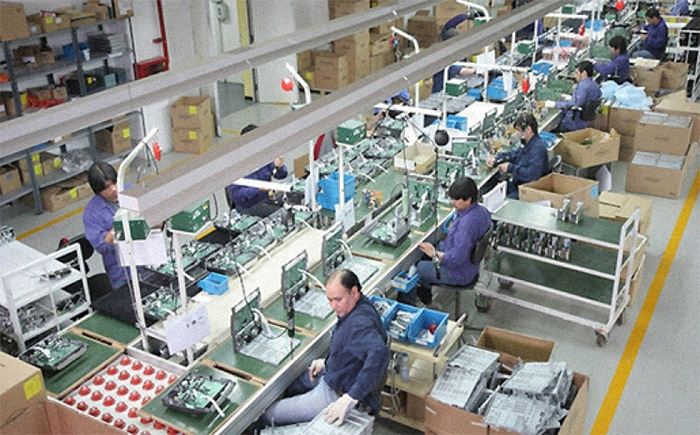
While the electronics industry in Tierra del Fuego recovers from the pandemic, the construction of a new software-based technological pole is beginning to gain strength.
After a year with little demand and production capacity limited by protocols and distancing, which included two total closures, the industries based in Tierra del Fuego are betting on a rebound in production.
The truth is that in addition to the usual activity of the electronics assembly and manufacturing plants, it is expected that this year some of the announcements associated with the project to build a technology hub in southern territory may finally materialize.
Stand by
Federico Hellemeyer, president of the Association of Argentine Electronic Terminal Factories (AFARTE), explains that last year the Fuegian industry began the year with the enormous need for consumption to become more dynamic to overcome a 2019 that was the worst year of the last 10, in terms of production and demand.
The pandemic ended up complicating a scenario with great difficulties that translated into the manufacturing of 6.3 million cell phones (the lowest in the last 14 years), compared to the 7.5 million produced in 2019 and the 12 million that left the Island in 2010.
Television production followed a similar logic and recorded 2 million units, the same as the previous year, but one million less than those manufactured in a normal year.
"Last year we verified restrictions in supply and demand. We could not produce and people did not buy, despite rumors of higher sales, which could have been a phenomenon in the segments with greater purchasing power, but which was not verified in the numbers", explica Hellemeyer.
With the plants working uninterruptedly since October, the sector expects to be able to manufacture 7.2 million mobile phones and 2.2 million TVs this year.
There is no data on the production of computers, because they practically stopped being manufactured since the elimination of import tariffs in 2017, which killed the incentive to do it locally, in a bet that sought to lower prices and resulted in a very limited supply of products and at fully dollarized values.
Juan Ignacio García, Secretary of Industry and Economic Promotion of Tierra del Fuego, adds that the sector has been in decline for many years. However, in 2020, despite the complications brought about by the pandemic, the general outlook ended up being relatively good.
“In the second semester, conditions began to normalize, there were even good levels of employment despite the context, and now there is a slight trend towards recovery”, he adds.
The recovery of the industry will be conditioned by the health scenario, the recovery of the domestic market and the evolution of real wages that will impact demand.
"The exchange rate is relatively stable and most of the inputs are imported. In that sense, there is a scenario of certain stability, we will have to see what happens with inflation. This year will surely be better than 2019 and 2020, but for the sector to recover we must wait for real salary growth to consolidate", esteem.
Plan B
Today the island has 29 electronics companies that employ 8,000 workers directly and 2,500 indirectly. But they are not working at the pace of other years and not all of them are fully operational.
The Government has just given “a hand” to the sector by signing an agreement for price stability and the entry of cell phones into Ahora 12, but is eagerly looking for a Plan B so that it does not depend only on electronics.
The short-term objective is to recover production levels prior to 2019 and there are expectations that the Industrial Production subregime will be renewed, which expires in 2023 and which allowed the creation of this electronic hub that manufactures 94% of the cell phones, televisions, air conditioners, microwaves and automotive electronics used in the country.
Nicolas Falcone, manager of Digital Fueguina, affirms that the extension of the system is necessary, but it must be accompanied by national policies that include, among other issues, the review of internal taxes for the import of components that threatened the continuity of the factories a few months ago.
In February, the Minister of Productive Development, Matías Kulfas, toured the Fuegian plants to find out the installed capacity, in view of the possible update of the benefits regime, to which some changes will probably be incorporated.
In addition, he reaffirmed the intention to expand the productive matrix with the creation of a technological hub that encourages the knowledge industry and software development.
The message is clear: “Selling services that do not have transportation costs is a key factor for development, considering that Tierra del Fuego is located 3,000 km away from the main consumption centers and is also an Island, which makes logistics even more difficult and expensive”, adds García.
For this, it is essential that companies locate there, in addition to attracting talent. "About 50% of formal employment comes from factories in the industrial sub-regime and 70% from electronics. It is a great opportunity to advance in other niches in which we do not have a presence today, because the promotion regime does not cover them and our industries can be complemented with new capabilities", he points out.
And adds: “We do not understand this as a productive matrix that is abandoned to take on a different profile, but rather to incorporate new sectors into its productive profile”.
José María Louzao Andrade, vice president of the Chamber of Computer Software and Services Companies (CESSI), assures that Río Grande and Ushuaia have universities with computer science and technology courses, and there is also a video game subsector that is highly developed.
“The software industry in Argentina is very powerful, but it is more oriented towards Artificial Intelligence, Machine Learning and data analysis solutions, what is called soft software”, he states.
And adds: "There is no great development of embedded software and for that to happen you need software developers to coincide with electronic engineers. That is the great possibility that Tierra del Fuego has".
For his part, Walter Salama, CEO of Bitpatagonia, a firm that has had blockchain data centers on the Island since 2017, highlights that the province has human resources in technology, systems, robotics and electronics trained, in many cases, in Japan, China and South Korea.
In addition, there is a tradition: companies also invest in professionals, and the firm has just closed a scholarship quota with provincial organizations for blockchain training.
How close is the new Polo
Globant was one of the first to take the step. In December 2020, it announced a disbursement of $600 million over three years for the development of a technological training plan that includes the creation of a team of 120 professionals and 200 scholarships to teach programming.
In the next few days, the first 50 selected for the Acamica program will begin, who will study for the next eight months.
"The fundamental thing for us was 'prepare the land and plant', now we have to start developing the local IT community and try to generate a space where we can establish ourselves", confides Mauricio Salvatierra, Talent Development Center Manager of Globant.
At the moment, the unicorn is working on defining the bases to undertake the construction of the Technology Pole. However, for Andrade the main limitation has to do with the fact that it is not yet known what work will be like in the next five years.
"There is talk of setting up a geographic hub and there are already some companies committed to settling there. The question is whether 100,000 square meters or 10,000 will be needed. How is it going to be produced? Everything that has to do with software for devices is going to require presence", he adds.
For the Digital Fueguina executive, it is difficult for tasks that can be carried out from anywhere in the world to be geolocated on the island. “It will be difficult to hire valuable resources who want to settle in Tierra del Fuego, considering that the background and expertise of current workers is clearly oriented towards the electronics industry and has little to do with software development”.
For Andrade, it is necessary to start talking about a complementary productive fabric with all sectors and stimulate the growth of parallel industries: "If I am next to the assembly industry and it does not grow, it will not require my services. But if I grow, they will also improve".
Salama was very enthusiastic about the project and encourages the arrival of new companies and the migration of workers from other provinces.
"We have been betting on Tierra del Fuego since 2017 and there are many cutting-edge technology companies that demand personnel. Not only them, but the companies that provide them as well. The pandemic may cloud the view a little, but the Government is doing everything possible to generate the conditions required to continue investing", he emphasizes.
In principle, the project is promising and the incursion of software companies into the world of electronics could give new energy to a sector that has been suffering a crisis for some years. We will have to wait for the storm of the pandemic to pass and see how many of these promises finally materialize.
By Sol Drincovich / IproUP




Latest news




Outstanding sector