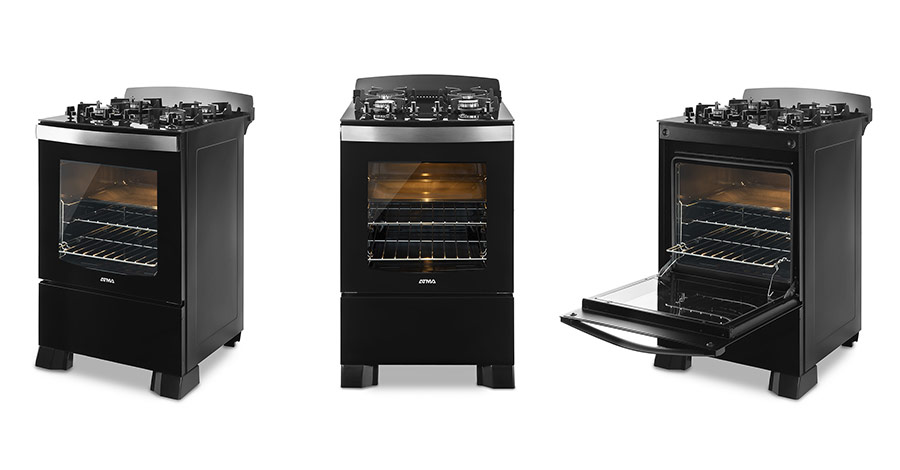
What led them to establish a Patnership with the Brazilian company Atlas for Development in Argentina, the first with the brand's gas system?
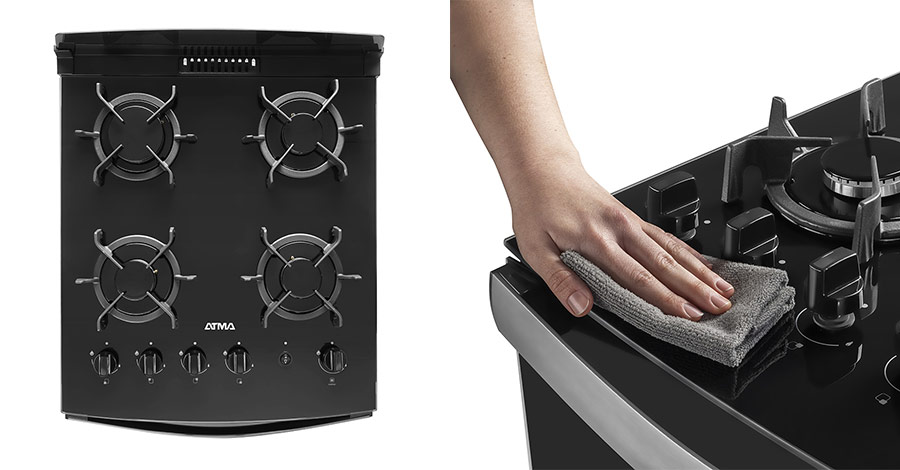
Basically, “Kitchens” is a category that when you look at it from the outside, Argentina remained archaic because in the last 60 years the stereotype and format did not change much, neither in functions nor attributes. On the other hand, in the rest of the world the category was updated with better technical specifications, with designs that somehow make cooking faster, more comfortable, with greater versatility. In addition, factors such as cleanliness and safety became increasingly important. This led us to enter the gas stove market, based on an approach that breaks with this standardized stereotype, and we feel that the product is generating a great impact.
The fact that this is a success case in other countries also motivated us. While we explore multiple suppliers, we found in Atlas, with its industrial process in Brazil, to a leader in this change in morphology and functions of the product, which was very well accepted in a Brazilian consumer, which is very similar to the Argentine in how to use the kitchen at home. That led us to meet a supplier that wanted to find a local partner to develop the Argentine market, and in ATMA we really wanted to venture into the gas kitchens segment, since we are already leaders in electric kitchens, but we had 95 % of the uncovered market. It was a pending account and for a year and a half we have been working on this process to have a kitchen that meets the technical regulations of the local market, but also retains the essence of what we were looking for.
They talk about democratizing the segment through this product, what do they point to in terms of a more accessible price?
By incorporating additional attributes, a much more attractive design and security functions, the idea was that it would not remain unattainable or limited to a niche segment. The kitchens market in Argentina is divided into three main segments: the input segment, of the first price, with the typical kitchen that represents 40 % of the market, and 35 % of the market that corresponds to the average segment, where this kitchen plays. Within the average segment the consumer finds prices that today range between 600 thousand pesos and almost 2 million pesos. We seek that this kitchen, which today is in the positioning of 2 million pesos, with the same attributes, same specifications and with a very innovative design, is located below the midline of this segment. Therefore, initially we seek to make a much more democratic and attainable segment.
The next step is not only to expand the family in terms of sizes and width, but also to start incorporating hybrid models, with kitchens of electric anafe and gas kitchen, in addition to developing a more accessible range.
How do linear launches continue?
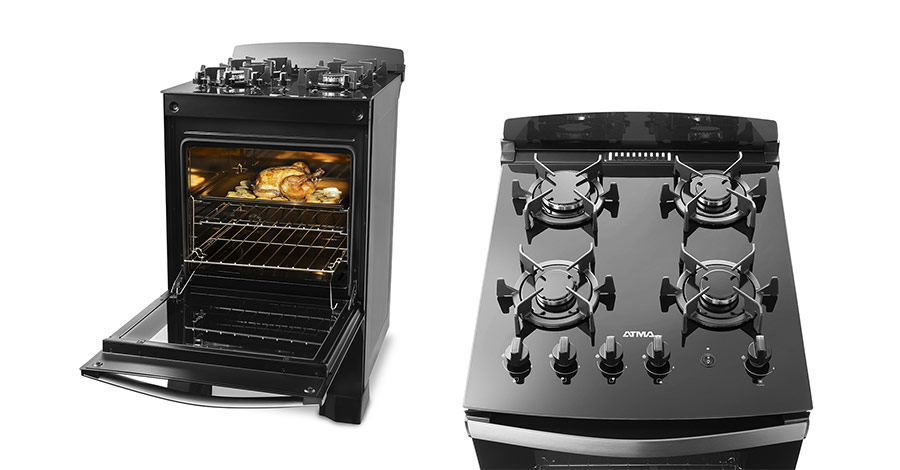
In August, we are throwing the kitchen of 56 cm in black. In September we will present the same kitchen with the same width but with an aesthetic change in the knobs and the handle, and with the mirror oven. In November we will expand the family to models of 70, 75 and 51 cm. In 2025, we will perform a much larger expansion in the category.