
Luis Alcazar, president of Red Acero: "In the current context it is almost essential to be part of a network"
We share with you an exclusive preview of the cover story of the next issue of Integración Magazine.


Within the framework of the recent Red Acero meeting, Revista Integración spoke with Luis Alcazar, its president, about the positioning and performance of the network in a scenario that faces changes in the entire dynamics of the sector.
Por Rodolfo Pollini

Luis Alcazar, President of Red Acero
What vision do you have today of Red Acero, of what it offers to partners as benefits in commercial and network management and the market in general?
It is very important, almost essential, to be part of a network. Working in isolation would be unfeasible, especially in the current context. The Government implemented a decree that threatens to leave a large part of retail out of business, a sector that represents some 5,000 outlets and 80,000 employees within the total of 1,200,000 workers that commerce has in the country. With the “Liquid Product” policy, the Government intends to force a price drop of between 20% and 30%. However, the suppliers we spoke with estimate that the real reduction would not exceed 7%, and would not even cover the entire sector. This expectation generates a total brake: consumers expect a significant drop that will not materialize, businesses do not sell, neither do manufacturers, and the State is unable to collect taxes. The market was practically paralyzed for more than a month.
The scene became more competitive, especially with online buying and selling. How do you see it from the trade?
There is some confusion in the Government regarding the weight of the online channel. It is believed that it represents 50% of sales, when in reality it does not exceed 20%. The remaining 80% continues to be carried out in traditional physical commerce. Although we face competition from direct sales from manufacturers through their websites, this modality does not exceed 20% of the total. Retail maintains direct contact with the customer that generates a degree of loyalty that is impossible to replicate in the digital channel.
That bond should be noted especially in the interior.
Definitely. In northern provinces such as Chaco, Formosa, Corrientes, Salta or Jujuy, the level of banking is much lower than in Córdoba, Mendoza or Buenos Aires. There, customers usually finance their purchases in installments directly at the store. And if a problem arises with the product, they resolve it face to face with the merchant. The dynamic is completely different from online shopping.
The great capillarity of the retail channel also seems to be linked to the size and characteristics of the country.
Exactly. Argentina has a very different idiosyncrasy from that of neighboring countries. Here there are about 2,000 businesses, while in Brazil, Chile or Uruguay the market is concentrated in less than 10 large players. In addition, the import conditions also differentiate us: in Chile, with tariffs of 3% or 4%, any product can enter. We face a very high tax burden. To analyze competitiveness, you have to look at the entire context.
What impact did the opening of imports have, from your perspective?
Today everyone, including Red Acero, is involved in imports because we must adapt to the market. However, and although tariffs have been reduced, importing is still expensive: between taxes and freight, the final price can increase up to 80% compared to the original value. This means that in some cases the business closes with very tight margins.
Logistics also impacts and is a global problem. What happens at the local level?
Not only are international freight costs more expensive, we also have a local logistics problem. Our country is expensive in taxes and transportation, which complicates the entire marketing chain.
How do you see consumer behavior and demand today?
Demand is slowed not only by the expectation of lower prices, but also by the economic situation. Interest rates are very high. With inflation projected at 24%, a well-qualified company accesses rates of 60%. In this scenario, purchasing power is very limited and consumption suffers.
How is pre-sale working, which was a traditional tool in the sector's work?
At Red Acero we were pioneers in pre-sales and it worked very well for years. Checks were issued, product and financing were secured, and the manufacturer delivered the merchandise as it was collected. This avoided credit risk. Today that mechanism stopped working. ROFEX is very expensive and this led many businesses and networks to start meeting to find joint solutions.
What credit tools do businesses use today to reach customers who do not have access to the banking system?
There are several instruments. It can be sold through financial companies with their own cards or with direct credit from the business. In large cities, cards predominate, because they are more convenient than financial cards, which apply rates of 8% or 9% monthly. The “Now 12” program, when it was in force, was a very valuable tool for consumption.
How do you imagine the future of networks or commercial groups?
It is difficult to think of a unique structure, because the Argentine idiosyncrasy is particular. In our case, Red Acero is a public limited company from the beginning and is managed directly by its owners. Unlike other groups, we only charge a fee proportional to the level of each member's purchases and we organize an annual event that allows us to sustain the operation.
Does the future of the groups involve further consolidating the union?
Without a doubt. Today it is very difficult to work individually. There are five small groups that bring together 1,000 members, which shows the importance of unity. Businesses that work completely alone should remain no more than 15 in the country, and only because they have a lot of strength in their area. We would not have been able to grow if we had not joined forces.
At Red Acero, is online commerce managed centrally?
No. Each business manages its own online sales strategy. The union on the network is exclusively for purchases; Advertising, marketing and digital platforms are the responsibility of each company.
How many partners do you currently have?
Today we are 86 companies distributed in 23 provinces, with 580 sales outlets and around 5,000 employees in total.
Are you open to incorporating new partners?
Yes, although it is not easy. We incorporate an average of two partners per year. We do not allow a business to enter that competes directly with one that already exists on the network, but we have added large companies, like Coppel, which has its own purchasing power. And practically no partner has withdrawn.
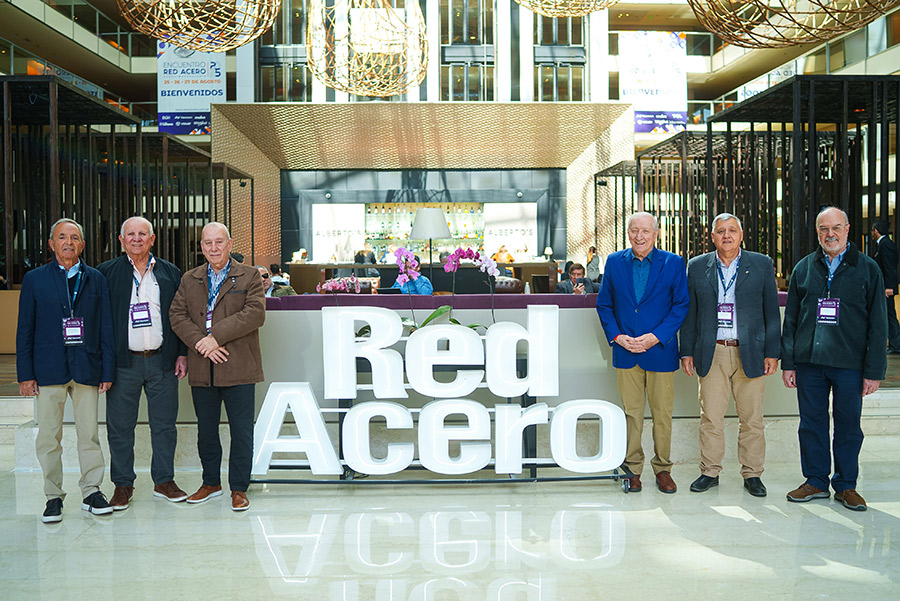
Red Acero Board of Directors during its 2025 Meeting, Hilton Hotel, Puerto Madero.
La Red Acero XXI S.A. It is the most important household goods purchasing group in Argentina. It is made up of 86 members distributed in 23 provinces, with more than 580 branches throughout the country, which employ more than 4,800 people. Founded in 2002, it has its headquarters in CABA and works with strategic suppliers such as Newsan, Mirgor, BGH, Mabe, Whirlpool, Visuar, Electrolux, Philips, Liliana, Radio Victoria, Midea, Longvie, Macoser, Señorial, Rheem, Fag Sistems, Piero, Karcher, Escorial, among others.
Since 2017, the group has entered the import business, increasingly diversifying product categories.
Every year, Red Acero organizes its Meeting at the Hilton Hotel in Puerto Madero, a key event in the sector that brings together hundreds of buyers and companies. In its last edition, it exceeded 900 daily attendees, consolidating itself as one of the most crowded events in recent years.
- Read the full note in issue 176 of Integración Magazine.




Latest news




Outstanding sector