“Apptiva Connection”. Reflections from the online meeting that explored the new reality of Argentine consumers at home
In the context of the pandemic, it is important for companies to understand what has changed in the way users engage with their customers.



In the context of the pandemic, it is important for companies to understand what has changed in the way users engage with their products and what strategies brands can follow to get to know them and build loyalty. That is why “Apptiva Connection” was held, an unprecedented event with an eye on the consumer of home products and appliances and which included the participation of several leaders in communication, technology, market analysts, CEOs of the sector and even influencers, to try to answer this question. Several interesting reflections emerged from this event organized by Apptivalo, an app that connects users with manufacturers.
Before starting, Rodolfo Andragnes, founder of this project, reflected on the importance, within companies, of Active Listening - an attitude associated with understanding others from their place. But without being connected it is impossible to listen to them and thus justified the name of this new event, “Apptiva Connection”.
The new user's profile and how to connect.
Ximena Diaz Alarcon, from YOUniversa and specialist in consumer trends, started the event by highlighting the 5 main trends of the new consumer: a) Consumers more willing to try new brands (75%) and products (83%); b) Greater awareness and reflection on consumption (8 out of 10) at the level of expenditure and rationality; c) Greater awareness about personal well-being (7 out of 10) and the environment; d) New “basic services” that improve connectivity (6 out of 10), which replaces other consumption elements; and e) New expectations about the shopping experience (63% became accustomed to online shopping), with delivery efficiency (7 out of 10) and packaging care (4 out of 10).
The approach to them must be done in a comprehensive manner, requiring major rethinking and also investments at the company level, from the importance of being present where and when needed, to a more human approach to needs and relationships.
"The consumer is constantly evaluating, optimizing time, energy, and money. What's next?, rethinking channels, and contact. The importance of being present and personalized treatment. Contributing human value to the sales experience." The pandemic left us with a lot of digitalization but also with a new appreciation of what is human,” Diaz Alarcon concluded.
The next one was Joan Cwaik, Technologist, Influencer, Writer MKT LATAM Maytronics and author of the book “The Human Dilemma”, who reflected on robotics and the Internet of Things, who highlighted that the technological user seeks a deeper relationship with the objects that surround him and that offer him comfort.
“The issue of autonomy is related to savings, for example, when the thermostat sensors of an air conditioner can help save up to 60% of energy consumption, then the IOT comes to play a useful and valuable role for the end consumer,” clarifies Cwaik.
Then, Rodolfo Andragnes, with a nice story about Marcela (user) and Jose (the businessman), told how the “Apptivalo” app, which allows users to register the products they have in their home and always have the services, manuals, invoices, tutorials and more at hand, allows both parties to link up to offer themselves, obtain value and achieve the much desired listening and connection with users. On the other hand, he highlighted that it was developed based on feedback from more than 40 companies in the sector and dozens of interviews with end users to also ensure user privacy and brand confidentiality.
“With the new user, post-sales today assumes a greater role in the company to develop strategies that allow us to understand their interests beyond the product and achieve greater loyalty and recommendation, but providing benefits to both parties,” comments Andragnes.
If we talk about users, influencers could not be missing either and Sergio Teubal, from the ORISHINAL agency, who invited Candelaria Negri @lacasaestaenordenOK, Cecilia Carena @cecicarena, Ximena Brunno @itBabyEat and Joan Cwaik @joancwaik, to discuss the relationship between influencers and brands in their relationship with consumers. They all agreed that the choice of brands is associated with the values it transmits rather than the price it pays, since the influencer's bond with his followers is based on mutual trust. “The recommendation of an influencer is like the advice of a good friend,” said Teubal.
Challenges and strategies of the home products market
In the second part of the event, the focus was on the industry, starting with an excellent talk by Eduardo Echeverría, from the consulting firm GFK, who shared hard data about the evolution of the market during the pandemic and the growth of online channels. Although this talk is worth a separate note, the keys are what was among the sectors that fell the least, although only thanks to the growth in the sale of cell phones, TVs, washing machines, freezers, notebooks and kitchen appliances.
On the other hand, the icing on the cake was the panel of CEOs among which were Pablo Freseni General Manager of ROTOPLAS and Señorial, Agustín Roberi, Executive Director of ALLADIO (Drean and Aurora), Agustín Jorge, General Manager of Essen.
There, together with Julián Villanueva, from Apptivalo, they analyzed the challenges, learnings, successes and failures during the pandemic, in addition to the role of the consumer within companies. These were the main conclusions.
Among the main challenges, Feresini highlighted the maintenance of the production chain to address the new normal but with a focus on the health of its collaborators, and helping other supplier companies so that they could go at the necessary pace, while resolving the issue of inputs and their breakdowns. Roberi, for his part, added the strategy of overstocking resources and generating a chain of product supply control motivated by absenteeism. Finally, Agustín Jorge highlighted the learning of processes to manage supply with suppliers and the stock of the production chain in an organized manner.
Regarding marketing chains and E-commerce, the conclusions were similar to those of Ximena Diaz Alarcón, that, being at home, people became more aware of their diet, and tried to find entertainment inside the house and that attention became key because the customer's demands were even greater. People began to base their purchases more rationally, reading recommendations and ratings.
Cooking was entertainment, recreation that for Essen was represented by an increase in demand and resellers, because people who had time to spare saw in direct sales the possibility of starting a business and making a profit. On the other hand, Señorial with the hot water tanks focused on preparing materials and education so that retail can expand e-commerce on social networks, pages, marketplaces, achieving significant growth in the construction sector. Finally, Roberi explained that Aladio, in order to address e-commerce, captured as much customer data as possible, thinking not only about direct purchases, but also about alliances with companies that supply complementary products.
Without a doubt, the challenge is to humanize the post-sales instance. Transform it into an experience that adds value to the user. Customer demand is increasing, and companies need to propose a reconversion in the way they serve customers.
"Apptivalo can give us a very big hand in the sense of cross-learning. We are not just talking about washing machines, water heaters, or pots. We are talking about consumer behavior, which to the extent we can add it, that aggregate behavior will give us more data to the entire sector to be able to provide more useful information to the consumer," reasoned Agustín Roberi.
More about Apptivalo: https://www.apptivalo.com/
Instagram: https://www.instagram.com/apptivalo_ok



Latest news
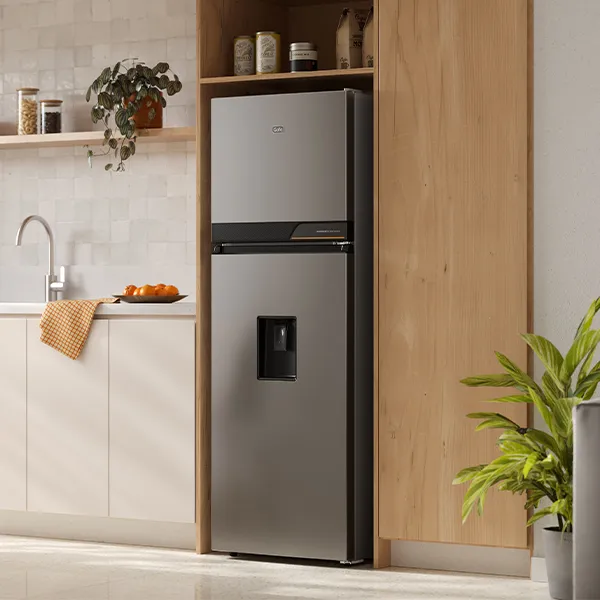
Gafa expands its refrigeration proposal with new No Frost models

Outstanding sector